Is banner advertising effective? Do Internet users pay attention to various ads and do they immediately understand the offer? If you have placed media advertising at least once, these questions are very familiar to you. Launching an effective marketing campaign is both the art of feeling your "audience" and a science that has very clear rules and predictable results. More about banners and their place in business promotion.
Do you remember a time when you didn't see a single ad on website pages? Yes, now we are used to saying that advertising doesn't work, there's too much of it, etc., creating news for experts to discuss. But is that really the case?
If you think digital advertising is only suitable for clicks, then you are wasting your marketing budgets. Especially if these advertising budgets are small.
Digital marketing with banners is the creation of an entire brand strategy, a well-thought-out contact, a constant reminder, a combination of teasers and value propositions, but by no means the only advertising channel. It is communication with potential customers at all points of the network where they are, to be remembered, to create positive emotions and to present the brand in every possible way.
Recently, marketers have been talking about a decrease in the effectiveness of banner advertising, because many customers do not remember the advertising they saw. But this is not entirely true. Media advertising creates a single information space around the company so that the client always has the opportunity to quickly find the right site.
Let's start from the beginning: what is an advertising banner?
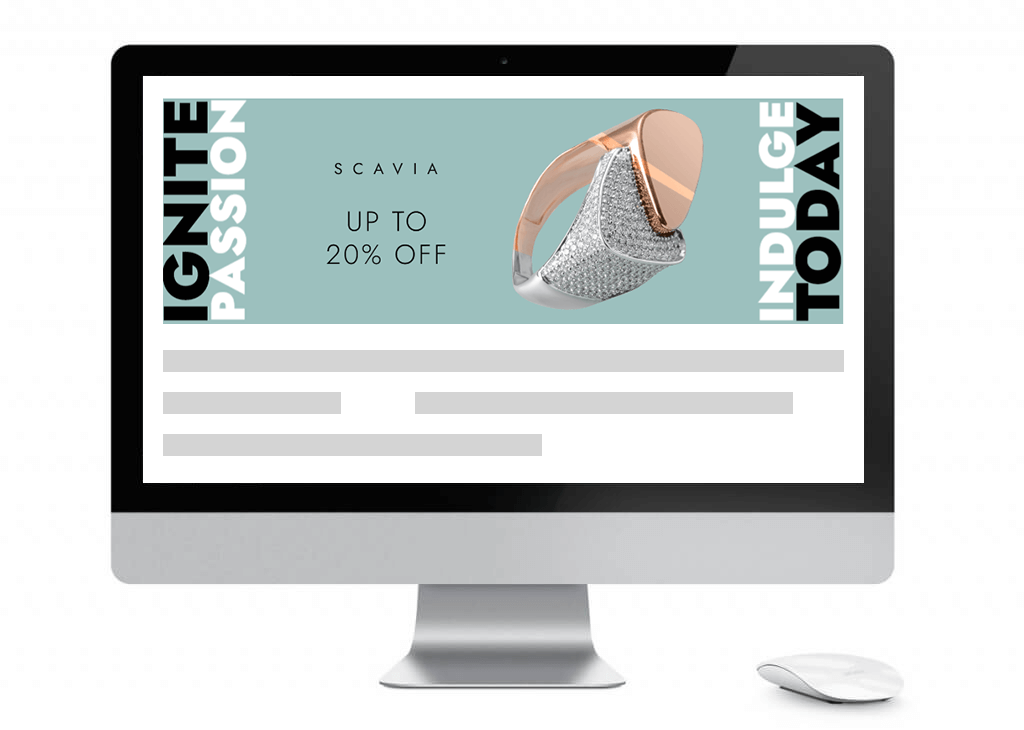
Banner or media advertising consists of various ad formats that are placed at the top, bottom, or side of a web resource. Something like billboards along the road that show information to potential customers. Goal: traffic to the site, potential leads and sales.
For these goals, advertisers pay media networks (Google, Facebook), choosing exactly who will be shown this ad. Later, special remarketing audiences can be created based on interesting content or viewing history.
What should an effective banner be like?of course, eye-catching;
with modern design and visually appealing;
with a short, concise text;
with animation and GIFs if necessary, to increase the likelihood that viewers will notice and click on the ad.
The unequivocal answer is formed, just as it is for any digital marketing tool: advertising is effective if it is visually engaging and used strategically.
To maximize the potential of banner advertising, set smart goals. Beware of ads and effectiveness reports that show unusually high click rates, as this could be bot activity.
In fact, media advertising works just like traditional advertising. You see a Pepsi ad, but you don't immediately go buy it. However, the next time you visit the store, you will definitely remember this brand when passing by the shelves. Sometimes all advertising does, or should do, is increase brand awareness at the right moment.
When evaluating the effectiveness of banner advertising, it is important to consider not only clicks, but also the viewability metric - that is, whether the banner was actually seen by the user.
Studies show that a significant portion of banners do not even come into view:
Visibility depends on:
Studies also show that a balance is important for effectiveness: optimal results are given by banners that are visible at least 50-75% of the area for several seconds.
Conclusion: a banner cannot be effective if it is simply not seen - therefore, viewability is a basic KPI along with CTR. So, next up is measuring effectiveness.
Undoubtedly, one of the most important tasks for a business is to understand the impact of your efforts. For banner advertising, a strategic approach to analyzing metrics is the key to successful advertising campaigns.
We offer to define metrics for analyzing the effectiveness of banner advertising for your company:
CTR is the percentage of users who clicked on an ad after viewing it and went to the landing page.
Importance: A high CTR indicates high engagement, but it is very important to consider the industry, level of competition, and context of the ad (of course, promotional offers show more activity than simple informational banners).
This is the percentage of users who performed a desired action (e.g., made a purchase) after clicking on an ad.
Importance: A high CTR is only part of the story, and the conversion rate reflects the real success of your campaign.
This is an important indicator of the total number of ad impressions to all representatives of the target audience.
Importance: A high number of impressions indicates broad reach, but the quality of impressions matters – targeted reach is key.
This is your revenue for every dollar spent on an advertising campaign.
Importance: ROAS provides a clear understanding of campaign profitability, helping you evaluate the financial impact of your efforts.
Where to get this information?
We recommend using Google Analytics and Facebook Ads Manager.
They provide comprehensive data on user behavior, conversions, and traffic sources. You can track the entire customer journey, from ad click to conversion, for a holistic understanding of the launched advertising campaign.
Having received data on launched banner advertising, it is necessary to make changes to advertising activities to get more results.
How to do it: compare two versions of your ad to determine the elements that are best received by the audience. Test various formats to find the ideal ratio.
Experiment with different placement locations on websites to determine the best positions for optimal visibility.
Make sure your banner ads are optimized for different devices and screen sizes.
Ultimately, the true power of continuous ad effectiveness monitoring lies not only in the numbers, but also in the insights gained from them that will allow you to improve and optimize banner campaigns.
In today's world, attention is priceless. You can only hold it by generating visuals that are simultaneously useful, aesthetic, and engaging. The effectiveness of banner advertising depends on various factors: from the ingenuity of the design to the accuracy of audience targeting or its localization.
More details on all factors.
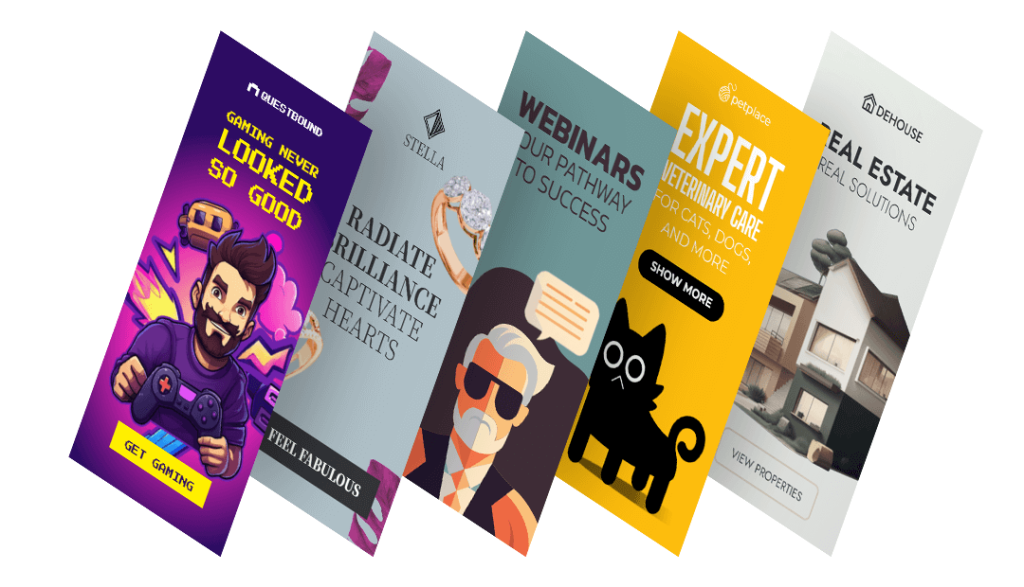
A bright and modern banner attracts attention; it must accurately match your brand's identity, not blindly follow trends. Evaluate your capabilities and try using ready-made template solutions that are already showing results.
Tip: choose compelling visual effects, keeping in mind the psychology of colors and images. Build harmonious combinations with your own branding strategy.

*example of BannerBoo "Valentine's Day" category template
A concise and clear message is a guarantee that users will understand your offer immediately. In fact, you have fractions of a second for the trigger of interest to work in a potential client.
Tip: sometimes 2-3 words are enough to convey the essence of the message, but only if they are perfectly chosen.

*example of BannerBoo "Games" category template
The first step to maximum effectiveness is painstaking work with target audience analysis. Divide all clients into small segments to adapt ads to specific requests, demographics, behavior, and interests for precise personalization.
Tip: use the data provided by advertising networks to understand who exactly the ad will be shown to and create content that will resonate with their needs.
Make sure your ad perfectly matches the content of the hosting platform. Agreed, an ad for a steak restaurant on a vegetarian forum would look quite strange. Choose placement locations where representatives of your desired audience are definitely present.
Tip: customizing ads to the context will improve user engagement and communication metrics.
Of course, ads placed at the top of the site are more likely to be seen, because you don't need to scroll down the page to do so. However, the price for such placement is also higher. Therefore, it is important to choose a balance between visibility and accessibility to get the best results.
Tip: focus on a large layout format to fall into the visible area (preferably the first screen of the site).
Research your audience: consider how the natural flow of user attention works on a web resource for strategic ad placement. Choose the areas that customers like most and where they often linger.
Tip: test different positions to find the optimal location for your chosen audience segment.
Different platforms attract different demographic groups of users, so it's worth choosing those that meet your needs.
Tip: analyze the behavior of users on each platform to determine and shape your advertising strategy.
A large part of website traffic comes from mobile viewing. Make sure your ads are optimized for smaller screens and look just as effective.
Tip: check on your smartphone how the ad will look; it's very simple, but it will help maintain design integrity.
Too many impressions can lead to ad fatigue and banner blindness. It is best to keep this indicator at 2-3 ad impressions per user, but, of course, everything depends on the industry and type of ad.
Tip: if the impression frequency is growing (and you cannot limit it automatically), try changing the banners so that they are not monotonous for the client.
Prepare seasonal offers in advance, as this will allow you to spend time making the advertising thoughtful and accurate. And it will also allow you to launch it on time.
Tip: create ads strategically to align them with peak user activity.
When starting your digital advertising, constantly analyze and adapt your strategies based on user feedback and performance metrics. The effectiveness of banner advertising is not a static concept; it is a synergy of workflows, new technologies, analysis, and consideration of user behavior.
Not everything is so cloudless in the world of media advertising. With ad blockers and low click-through rates (CTR), it's no wonder that doubts arise about its effectiveness.
Back in 2018, Business Insider predicted that 30% of all users would use some form of ad blocking. In reality, it's not as scary as it seems. And largely thanks to online media: large publishers such as Forbes and GQ require users to disable ad blockers to access the desired content.
Ad blockers are not an enemy, but an opportunity. In fact, Google's standard (not extended!) ad blocker only blocks the most aggressive pop-up ads and auto-playing video content. So, if you create great designs that are interesting to users, you have less to worry about the impact of ad blockers on your media campaigns.
In the early days of media advertising, click-through rates could reach 44% – more than any marketer could dream of today. Poor quality banners are partly to blame for the low CTR. There is little doubt that there are ways to increase CTR and improve banner effectiveness by improving their quality.
However, is CTR a useful indicator of success? Currently, the goal of many media campaigns is to increase brand awareness with an emphasis on reach and impressions as indicators of effectiveness. Media advertising is a useful strategy for conveying your brand's message to a wide audience.
Native advertising is a type of online advertising that matches the format of the platform on which it appears. It can take the form of a video, an article, or a forum.
It is considered effective for several reasons:
in recent years, native advertising has had the highest click-through rate (CTR);
viewers show more purchase intent than with banner ads;
native advertising provides a more convenient interaction for internet users.
Both native and media advertising are ideal for any business, but it's even better to use them together.
Online bots are programs that automatically interact with users through a messaging interface, such as Facebook Messenger, Telegram, or other web resources. They can perform a variety of tasks, from answering questions to making purchases.
These same bots can affect the reach of media campaigns and create peak traffic, although in fact these are not real users. In fact, the percentage of such online users in reach is too small to fundamentally affect effectiveness and results.
This is when users get tired or become aggressive from the constant exposure to advertising messages in media channels, which can lead to an increase in the bounce rate.
Negative consequences:
ad oversaturation (too many diverse ads that simply persecute internet users);
low ad relevance (if the client does not see the benefit, then he does not want to follow the ad);
ad aggressiveness (a large number of windows, auto-playing video with sound, or a large number of banners can cause negative emotions);
ad monotony (the same style and tone are the cause of fatigue, because everyone wants an original presentation).
To overcome ad fatigue, we recommend:
creating creative and original advertising that matches the interests of the audience;
ensuring high relevance of advertising messages;
reducing the number of intrusive elements in advertising campaigns;
experimenting with different advertising formats and channels.
Positive and strategically planned advertising content can increase the effectiveness of campaigns and reduce ad fatigue among the audience.
One of the key reasons for the low effectiveness of banners is the phenomenon of banner blindness.
According to research:
According to Nielsen Norman Group:
This is not just behavior – it's a cognitive mechanism: the brain automatically filters out "advertising noise" to focus on relevant content.
What to do?
You need to adapt to user behavior!
Solution 1. Native design
Banners that look like part of the content perform significantly better:
Solution 2. Content relevance
Users pay attention only to what matches their goals: irrelevant advertising is ignored. The more precise the targeting, the higher the chance of gaining audience engagement.
Solution 3. Use of motion and dynamics
Animation can indeed attract attention, but it only works if it's appropriate and not overwhelming. Don't overdo it, so that flickering or aggressive animation doesn't, on the contrary, increase banner blindness.
Solution 4. Look for non-standard formats and placements
Since users ignore standard ad zones, it's worth testing content integrations, using in-feed, sticky, interactive formats. Yes, and Nielsen Norman Group emphasizes: users avoid patterns and systematicity, not advertising as such.
First, visuals are everything!
We recommend working on a harmonious and modern design in special resources, such as BannerBoo! The online banner generator allows you to:
create various ad formats (including all sizes of popular media displays) in the workspace;
use 12,000+ ready-made templates, including for video and GIF animation, in which you just need to add the necessary information;
work in an intuitive drag-and-drop interface (very convenient for anyone, even those without design skills);
communicate in creative teams and optimize all processes to create stunning results.

*example of BannerBoo "Business" category template
Secondly, it is worth remembering all the secrets of effective design:
According to experts, the future of media advertising will be determined by new technologies, with artificial intelligence (AI) at the center.
AI-powered tools are transforming the creative process by automating the creation of personalized and dynamic banner ads. This will be new adapted content based on user behavior, preferences, and demographics.
To provide the best solution, AI algorithms analyze vast datasets to predict user behavior, allowing advertisers to meet user needs. As a result, precise targeting and personalized content contribute to higher conversion rates.
Engaging technologies break down the traditional boundaries of banner advertising, offering interactive advertising experiences. Users can interact with products in virtual spaces, guaranteeing brand memorability.
There will be more and more game elements in banners to increase the time users interact with ads.
The growth of video content is expected to continue, with video banners becoming the dominant format.
Increased user awareness may lead to stricter rules and restrictions for advertisers.
The future of banner advertising is an interesting mix of innovation and adaptability. As artificial intelligence increasingly penetrates the advertising ecosystem, creative possibilities and targeting options become almost limitless. Don't miss the opportunity to get even more conversions!
The effectiveness of banner advertising is not a constant, but a continuous process and work on mistakes. It is important to adapt to trends, user behavior and technological progress. With proper analysis and use of this data, banner advertising will have the power to engage, be remembered and contribute to brand success.
What affects the effectiveness of banners?
stylish design (a harmonious combination of creativity, clarity and brand consistency is crucial);
relevance of banner advertising for a specific audience and compliance with needs;
segmentation, personalization and contextual relevance not only optimize user interaction, but also contribute to increasing its effectiveness;
the placement of the banner matters, so choose visible and convenient positions;
click-through rates, conversion rates, impressions and return on ad investment form the basis for decision-making and campaign management.
The modern effectiveness of banner advertising depends not only on the format itself, but on:
For your banner to be effective, you need to use all the recommendations listed in the article. And then your advertising will be seen, it will interest customers and resonate. Media ads will inspire and open up new opportunities for interaction online!
The value of banner advertising depends on various factors: target audience, industry, ad design, or location. When used correctly, banner advertising can:
increase brand awareness;
attract traffic;
contribute to conversions.
Now, hurry up to create banners and launch them into an advertising campaign!
The main goal of an advertising banner is to attract the attention of the target audience and encourage them to take a certain action.
Banner advertising is designed to convey a message, promote a product or service, and ultimately achieve desired results (conversions).
CTR varies depending on the industry.
On average, banner ad CTR tends to be relatively low, often ranging from 0.1% to 0.5%. However, it is important to note that click-through rate is only one of a whole list of metrics that affect the relevance and effectiveness of the entire advertising campaign.
We recommend paying attention to the following indicators:
CTR: the ratio of users who clicked on the ad to the total reach;
conversion rate: the percentage of users who performed the desired action after clicking on the ad;
ad impressions: the total number of ad impressions;
return on ad spend (ROAS): revenue generated for every dollar spent on an advertising campaign.
engagement metrics: user interaction, time spent, and clicks on interactive elements.
The effectiveness of an advertising banner is influenced by many factors, the main ones being:
visually appealing design that matches the brand identity;
targeting a specific audience with personalized content;
a clear call to action (CTA);
placement on the right resources and in the most visible positions.
Banner advertising can generate revenue for website owners and resource editors through various models, including:
cost per mille (CPM): advertisers pay a commission for every thousand impressions.
cost per click (CPC): advertisers pay for each ad click.
cost per acquisition (CPA): advertisers pay when users perform a specific action, such as placing an order.
If you place banner advertising, the exact revenue you receive depends on:
targeting parameters;
ad quality;
the value of the offer provided to users.