One of the most creative and informative formats is DOOH advertising, which shows a high level of interaction with the audience for various business industries. This format is considered cost-effective and large-scale, which is why many companies literally compete for the best display locations. However, location alone does not guarantee results; the brand's task is to create a creative advertisement that the target audience will definitely notice.
A well-thought-out brand marketing strategy focuses not only on general digital activities but also takes into account local activities in places with the largest crowds (OOH and DOOH tools). Add local flavor to your advertising campaigns to cover the entire Customer Journey (every step of a potential customer's contact with the company).
The format of ad delivery depends on the brand's goals: localization of product assortment, reaction to local events and activities, personalization of the product for the needs of individual regions. If you actively work on presenting the company and implementing previous experience in high-traffic areas across cities and locations, the marketing strategy will become as complete and comprehensive as possible.
We have selected 20 creative examples of DOOH advertising that will inspire you to create your own unique ads. Let's go!
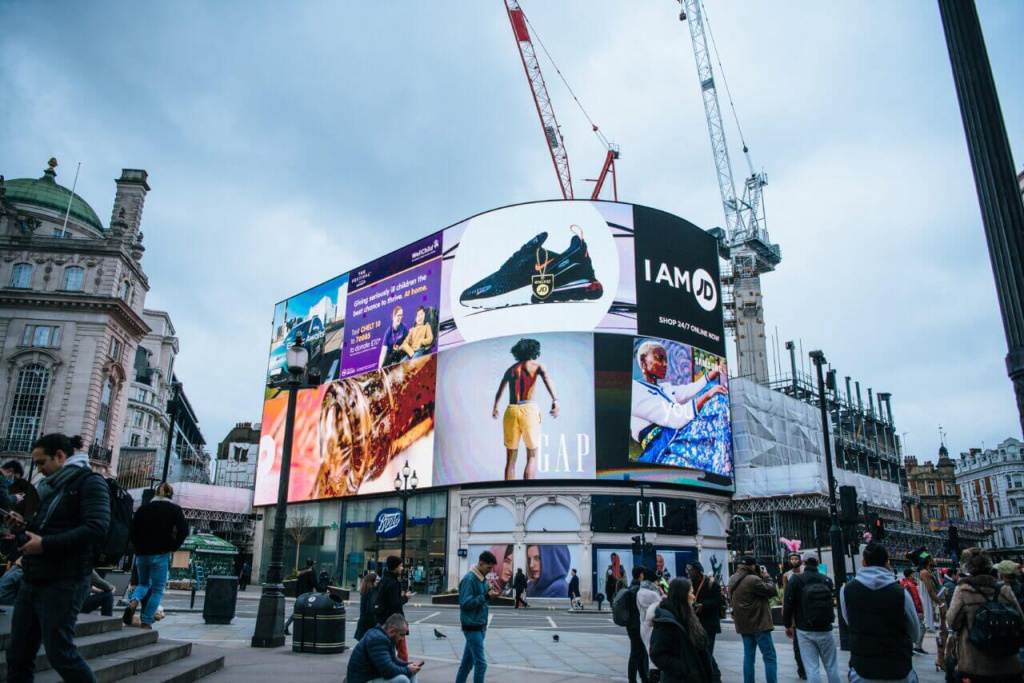
DOOH, or digital out-of-home advertising, is familiar to everyone. You see it on digital screens when you walk past a bus stop, ride the subway to work, wait for a flight at the airport, or go up an escalator in a shopping mall.
A long time ago, replacing a billboard or poster was a whole ordeal. Now, you can switch a digital image even every 5 seconds and change the advertisement depending on the time of day, month, or season. This allows for creating very precise and engaging ads for each audience segment.
DOOH is also:
dynamic and diverse advertising formats;
the ability to rotate several ads simultaneously;
control over display activity and turning them off when no one is around to save resources.
So, dive into the world of interactive ads for digital displays, and we will tell and show you how.
A company strives to be near potential customers at every step. When a person leaves their home, puts away their smartphone, and closes their laptop, they should not lose contact with the brand.
Digital out-of-home advertising is very effective and becomes that unobtrusive element that accompanies the client wherever they are: choosing groceries in a shopping mall, waiting for a train or plane, or driving on a highway.
Advantages of outdoor advertising:
cheaper than television or radio advertising;
more concentrated, helping to more accurately form the audience's perception of the brand;
offers options for placement selection;
guarantees wide reach;
communicates with different groups of people for the same cost.
Cons of outdoor advertising (yes, they also exist):
inability to segment the audience;
less access to instant information about the brand or product;
customers may simply forget the advertising message as soon as the ad disappears from view;
cannot offer personalized formats (unlike digital advertising with cookie tracking).
If you decide to use digital outdoor advertising, you must be prepared to create an effective advertisement that will definitely be remembered by the target audience.
If previously Digital Out-of-Home advertising was associated primarily with large screens and spectacular visual solutions, in 2026 the format has turned into a full-fledged data-driven channel. Today, it's not just beautiful advertising on the streets, but a full-scale technological platform that combines programmatic purchasing, dynamic creative, and accurate measurement of results.
Programmatic DOOH: automation is becoming the foundation for launching advertising campaigns. Purchasing ad space through DSPs and SSPs is becoming increasingly simple, as most operators open their networks to automated auctions.
The programmatic approach allows brands to:
In 2026, DOOH increasingly works as part of an omnichannel strategy rather than a separate offline channel.
Dynamic Creative – advertising that reacts to context.
Brands are massively using the capabilities of dynamic creative. Modern DOOH screens can change content depending on:
For example, in rainy weather, offers for taxis or coffee shops can appear on screens, while during lunch – ads for quick snacks or delivery services. This approach increases message relevance and makes DOOH a highly "live" communication channel.
Measurement and attribution metrics: DOOH becomes a performance channel.
In 2026, DOOH finally goes beyond being an image-building tool. Thanks to the development of analytics and AI models, brands get access to:
DOOH is increasingly used as part of performance campaigns – with clear KPIs, ROI, and the possibility of real-time optimization.
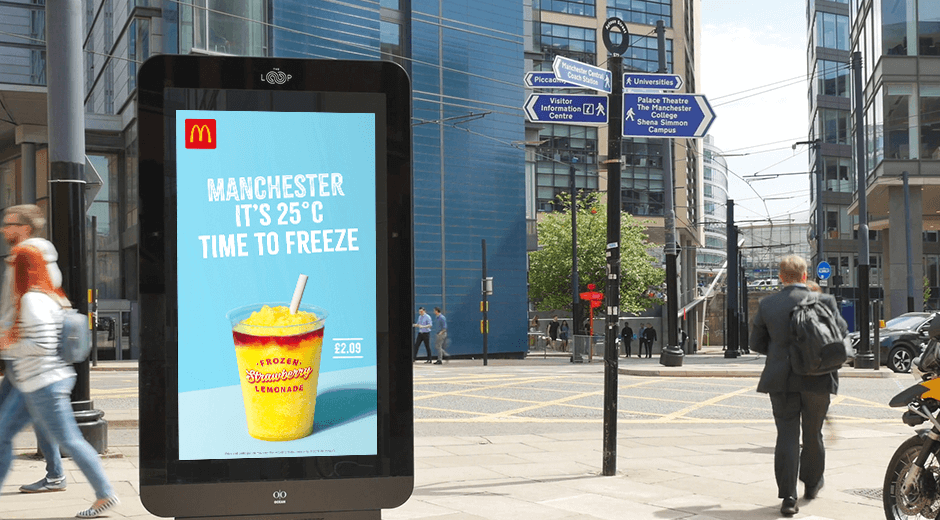
McDonald's in the UK advertised two frozen drinks – strawberry lemonade and frappe. The campaign was adapted to weather conditions: when the temperature rose above 22 degrees Celsius, the advertisement appeared on the digital screen. And at temperatures over 25 degrees, the name of the city and the temperature value were added to the ad. Summer drinks from McDonald's were promoted much more effectively than with a standard advertising poster placement, and the audience received relevant, timely, and useful content.
material taken from grandvisual.com
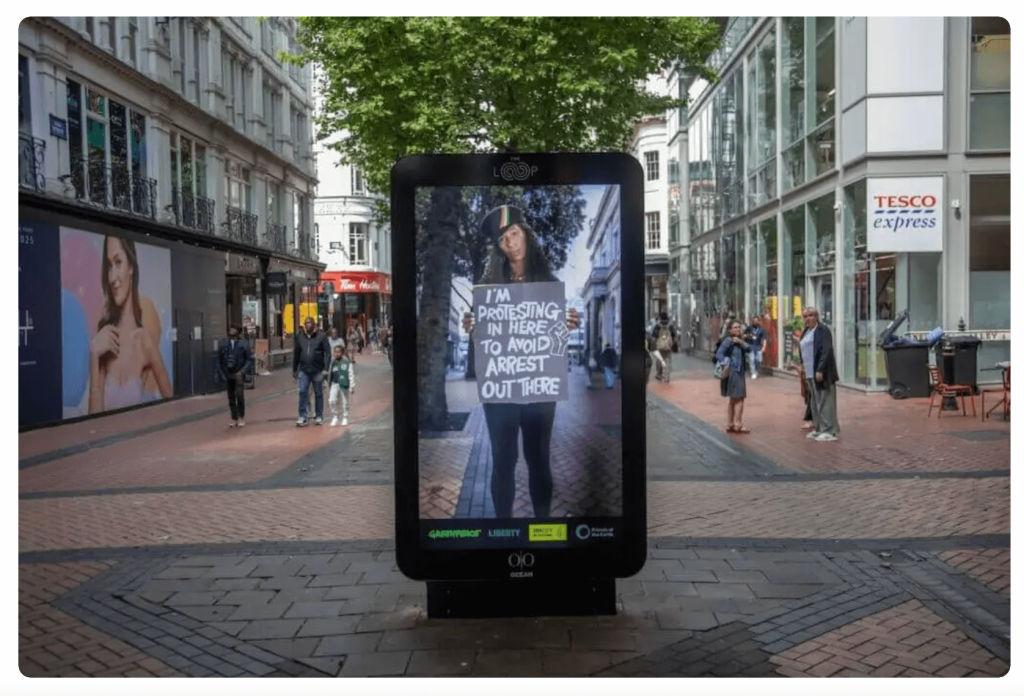
In 2025, Greenpeace, together with the creative agency Elvis, implemented one of the most high-profile DOOH activations of the year – the "They Can’t Arrest This Billboard" campaign, which turned digital screens into a space for public protest. The project appeared simultaneously in the busiest locations of London, Birmingham, and Manchester and was a reaction to the tightening of British legislation regarding the restriction of protest activity.
As viewers moved through the city, they saw changing images of activists, creating the effect of a continuous, silent demonstration stretched across dozens of screens. The campaign clearly demonstrated that digital outdoor advertising in 2025 remains one of the few channels capable of bringing social and political topics directly into public space and making them part of urban life.
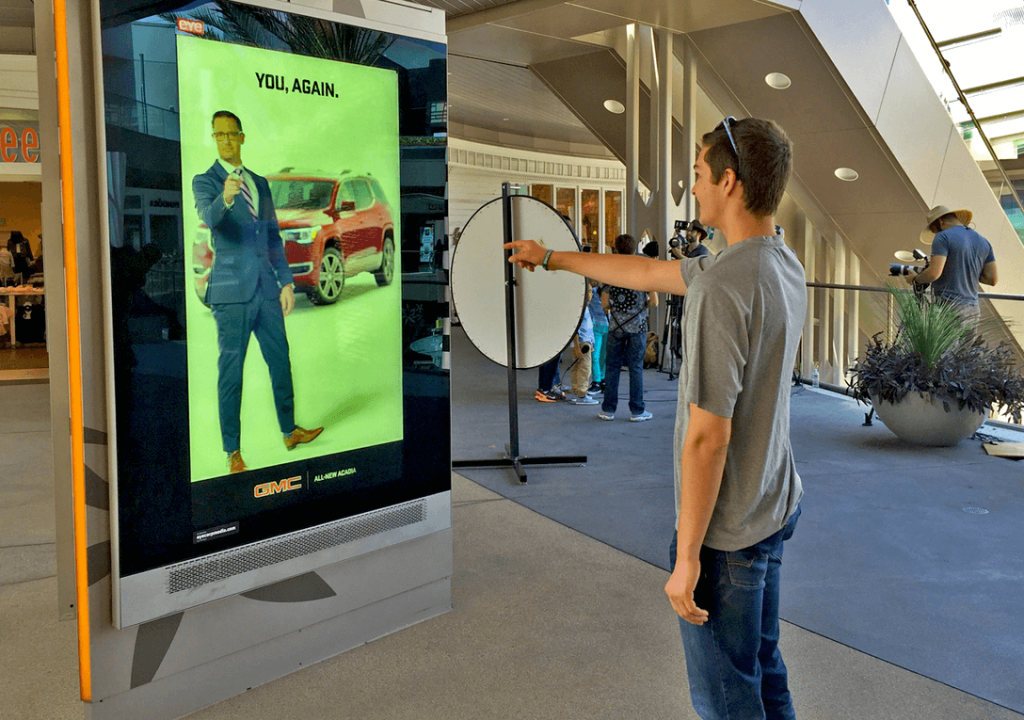
Acadia GMC used face analysis technology to create engaging digital signage with dynamic content. Cameras on the digital display, using artificial intelligence algorithms, could determine the demographic characteristics of the audience (age and gender) and, based on this, show the viewer one of 30 possible targeted video ads.
This campaign was one of the first to show the potential of machine learning in digital outdoor advertising. GMC used the power of DOOH to personalize its content and create personal advertising messages.
material taken from kioskindustry.org
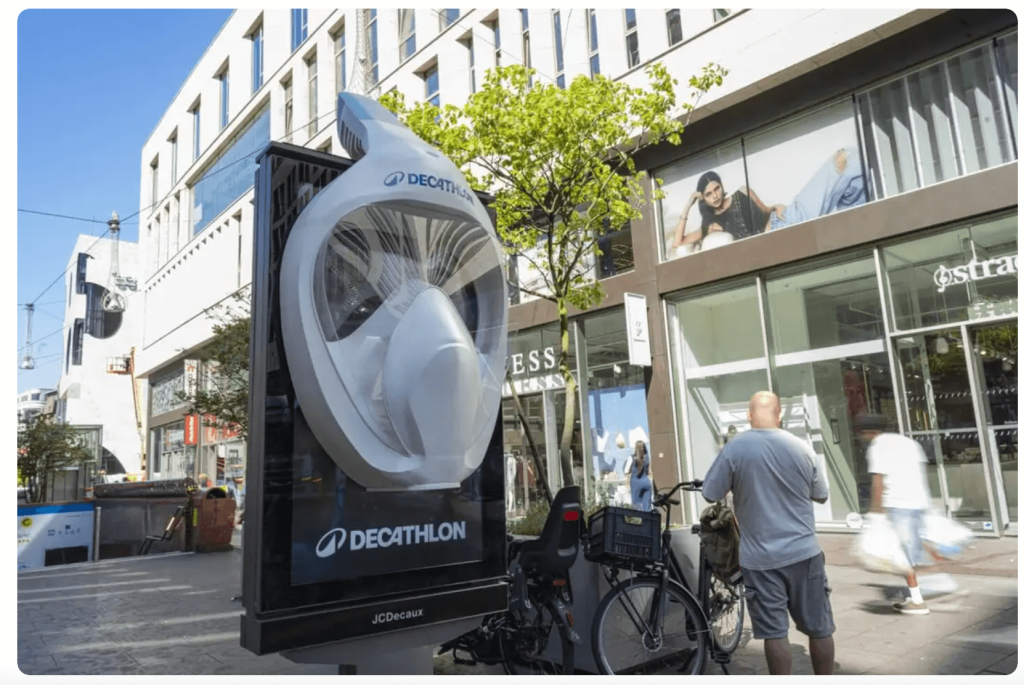
For the tenth anniversary of the release of the Easybreath snorkeling mask, Decathlon implemented a vivid outdoor campaign that instantly grabbed passersby's attention. Together with JCDecaux Netherlands, the brand placed large-scale 3D installations at two key points in the Netherlands: on one of the busiest shopping streets in The Hague and at the main transport hub in Amsterdam. A volumetric model of Easybreath protruded beyond the plane of the screen, with the tube rising upwards, creating the illusion that the character was just emerging from the water. Thanks to the combination of physical 3D elements and digital visual effects, the installation looked "alive" — the mask seemed to move along with the waves.
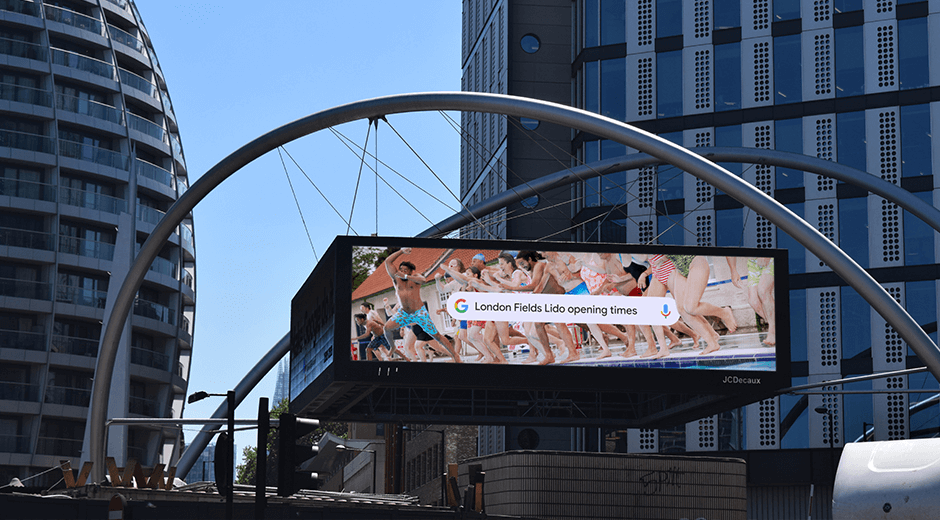
Adaptive digital ads from the brand were placed in the UK. The campaign highlights Google Search and Maps features, showing popular places and seasonal search terms like "best ice cream in Glasgow" or "parks nearby."
This adaptive digital advertising is a bright example of DOOH advertising. Furthermore, it shows how the campaign truly reflects and demonstrates how Google Search and Maps can help people make the most of these opportunities.
material taken from grandvisual.com
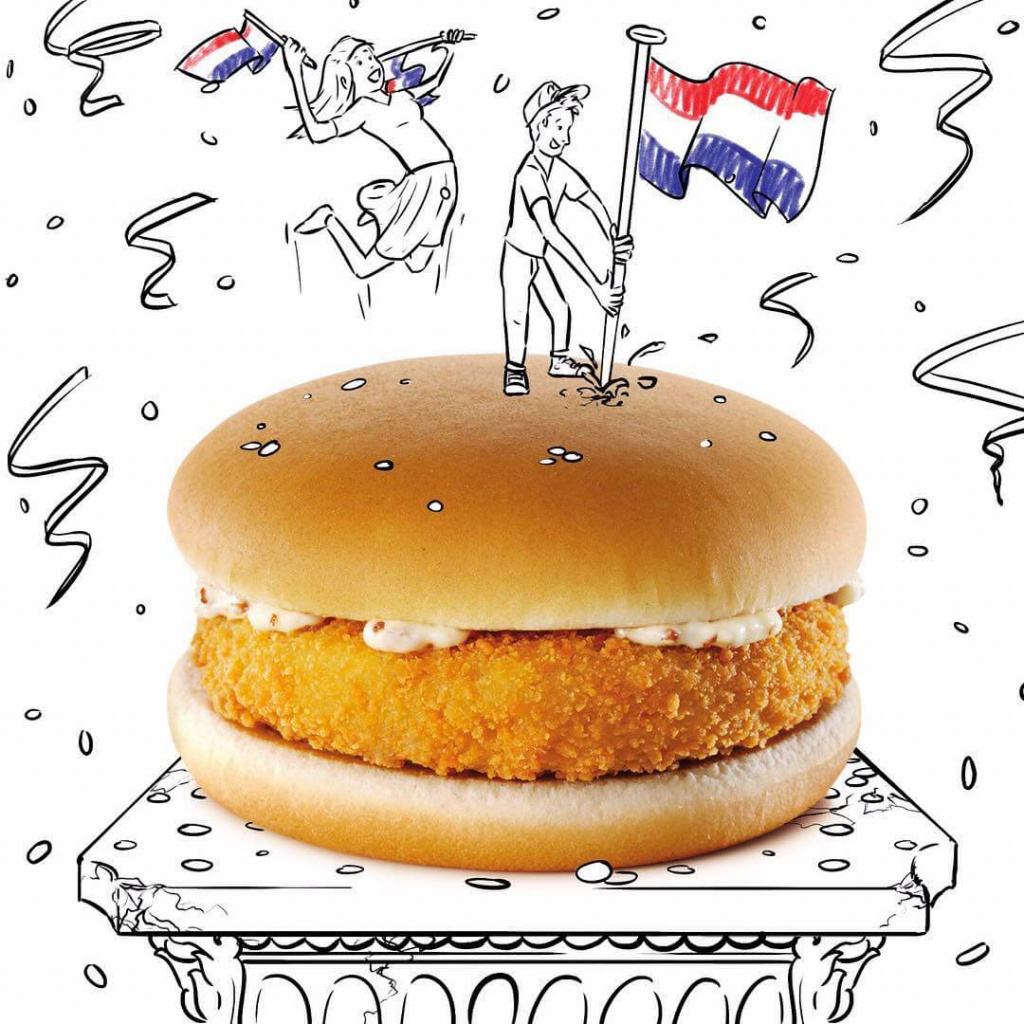
This is simply a textbook example of local digital marketing from the international fast-food chain McDonald's, where the product assortment is adapted to the needs of various markets: Spain has "Patatas Deluxe," India has the "Dosa Masala Burger," the Netherlands has the "McKroket," and in South Africa, standard BBQ sauce was replaced with McBraai sauce. All these advertisements are placed in high-traffic areas and offer to join the community of tasty fast-food lovers.
material taken from www.getmarvia.com
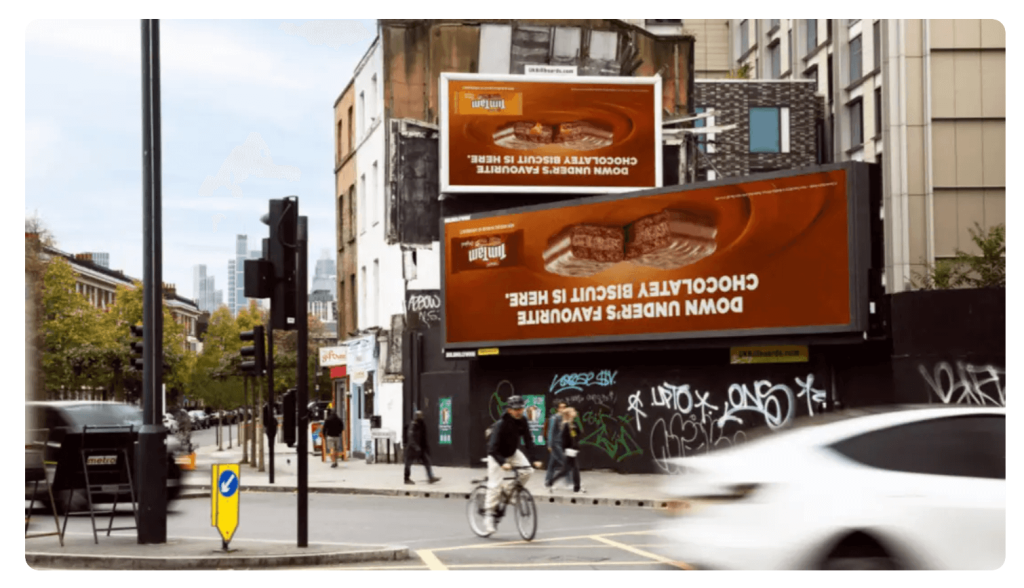
During its entry into the British market in 2024, the Tim Tam brand chose a bold DOOH strategy to quickly announce itself to a wide audience. Together with the creative agency Insiders, the company launched a campaign with upside-down billboards, referencing the brand's Australian character and immediately breaking habitual visual patterns. Despite a rapid increase in supermarket sales, many consumers did not yet know that the cookies were already available across the country, and the campaign aimed to fix this. Using signature colors, large product close-ups, and ironic slogans, the ads made passersby stop and look more closely at the images. The effect of the inverted space activated the brain's instinctive reaction to unusual shapes and significantly increased the campaign's visibility. As a result, the brand achieved a recognizable launch and a strong creative signal for a new audience.
Pepsi Max actively uses digital signage in a creative format. They turned London bus stops into a gallery of images with various scenarios. The screens used cameras and acted like a window, using the street space to show "unbelievable" events around these stops.
material taken from www.dooh.ly
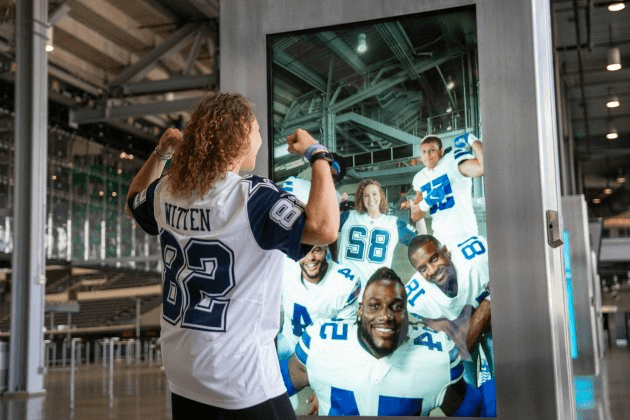
In 2019, the Dallas Cowboys installed interactive "Pose with the Pros" kiosks in the concourses of AT&T Stadium. Interactive screens offered fans the chance to take a photo with virtual members of the Dallas Cowboys. Fans could choose up to five of their favorite players, and then an AR program overlaid the players' photos around the individual in the image. The new photo could be shared via social networks or sent by email.
material taken from www.inc.com
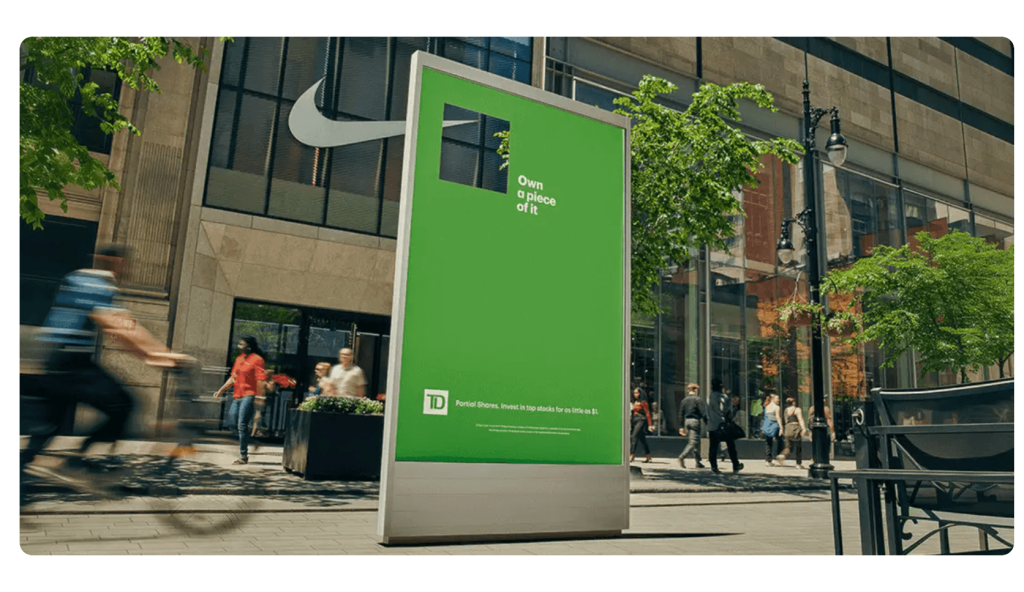
TD Bank launched a creative OOH campaign that clearly explained the principle of fractional investing right on the streets of Canadian cities. In high-traffic zones, green panels appeared with small cutouts in windows, through which only fragments of the logos of Apple, Google, Starbucks, and McDonald's were visible. This method worked as a visual metaphor: even a small part can mean owning a share of a major brand. Placement in areas where people stop and look around enhanced the engagement effect. The campaign emphasized that one could invest with as little as one dollar, while simultaneously highlighting TD's unique offering as the only bank broker with fractional shares. This case became an example of how simple and targeted outdoor advertising can accurately convey a complex financial idea.
How to turn a town into a real game? Marketers for PLUS supermarkets in a small town in the Netherlands proposed a promotion: residents could play Monopoly, making offers for streets and buildings. This is a wonderful example of point-of-sale outdoor advertising, encouraging communication and implementing gamification in real life.
By uniquely combining digital campaigns with smoke detectors, Hjärtat was able to advertise anti-smoking products directly to smokers in Sweden. It worked like this: when the smoke detector detected a smoker, it triggered a digital sign to show someone coughing. The relevance and resonance of the campaign were at the highest level.
material taken from www.dooh.ly
Dutch beer brand Bavaria created a special campaign for the Dutch Carnival. Marketers created an online petition to have the days of the celebration declared holidays. The campaign was widely distributed across all social media channels and supported by national television advertising. Thanks to this, Bavaria won the trust and support of many residents.
Results: over 4 million impressions and hundreds of thousands of likes, comments, and shares.
material taken from www.getmarvia.com
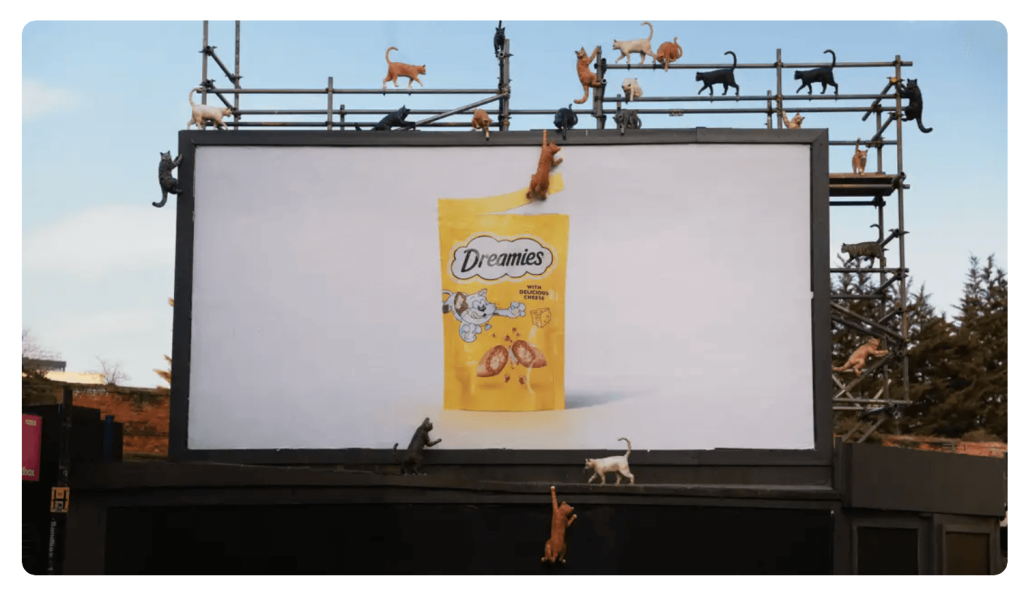
The Dreamies brand implemented a bright OOH campaign in London that literally brought feline antics into the urban space. Together with the agency adam&eveDDB, the company installed large-scale 3D figures of cats "climbing" building facades, hanging from balconies, and reaching for a giant package of treats. All sculptures were created based on real cat poses and hand-painted to look as lifelike as possible. This format clearly illustrated the idea of the "Cats Will Do Anything" campaign — the pets' readiness for any tricks for the sake of Dreamies. The installations immediately grabbed passersby's attention and became popular photo zones.
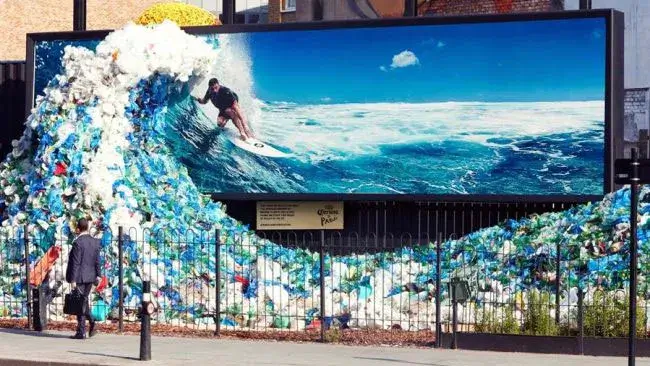
In 2018, Corona created an advertising integration about environmental problems. Artist Andy Billett created a three-dimensional "wave" from plastic waste collected in the UK, combined with an image of surfer Chris Hemsworth. The billboard was designed to show the full horror of ecological issues and the volume of plastic entering the oceans. Citizens were urged to recycle waste. Similar campaigns were conducted in Melbourne, Lima, Santiago, Bogota, and Santo Domingo.
material taken from www.creativebloq.com
Since 1950, UNICEF has sent children the well-known orange boxes for collecting donations while trick-or-treating. Since last year, the company has completely switched to digital technology and replaced the boxes with a QR code. People can make donations, communicate on social media, and learn more about UNICEF. The campaign is aimed not only at children (as before) but also at Gen Z and millennials who are active in volunteering and social activity.
material taken from www.outbrain.com
The beer brand found an unexpected concept with the help of the sun. The creative begins with an ordinary beer bottle label applied to the wall of a building painted in Corona's signature yellow color. During a specific time interval between 18:30 and 18:45, passersby see the billboard in its full glory. It depicts a bottle of Corona beer and the text "made from nature." Thus, the manufacturer indicates that the beer contains only natural ingredients. Location: Brighton, UK.
material taken from www.thedrum.com
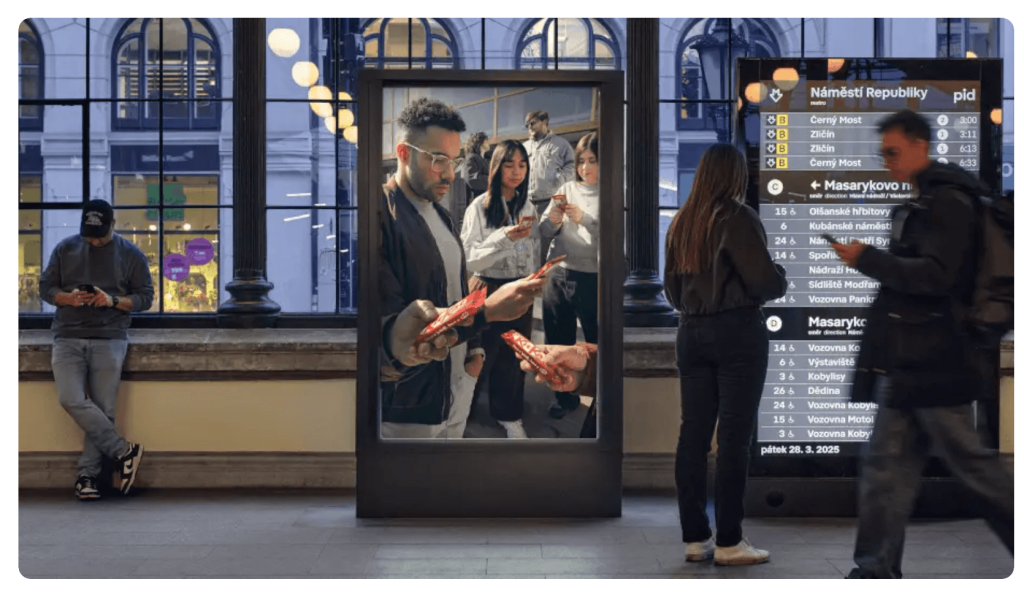
KitKat, along with VML Czechia, reimagined its legendary slogan "Have a Break" in the "Phone Break" campaign, addressing the topic of digital addiction. In a series of OOH visuals, smartphones in people's hands were replaced with KitKat bars in familiar situations: at stops, in queues, and while waiting. The ads appeared on billboards, in the subway, and in other crowded places where the habit of constantly checking the phone is particularly noticeable. Thanks to the minimalist style and recognizable scenes, the brand did not even need to show its slogan. The campaign received the highest award, the Cannes Lions Outdoor Grand Prix, confirming the power of a simple idea.
The brand Piz Buin decided to visually show what happens to the skin if sunscreen is not used. They used an ideal combination: outdoor advertising plus environmental analysis. With the sunset, the image on the billboard begins to be illuminated with ultraviolet light, and sunburns become visible.
material taken from www.adsoftheworld.com
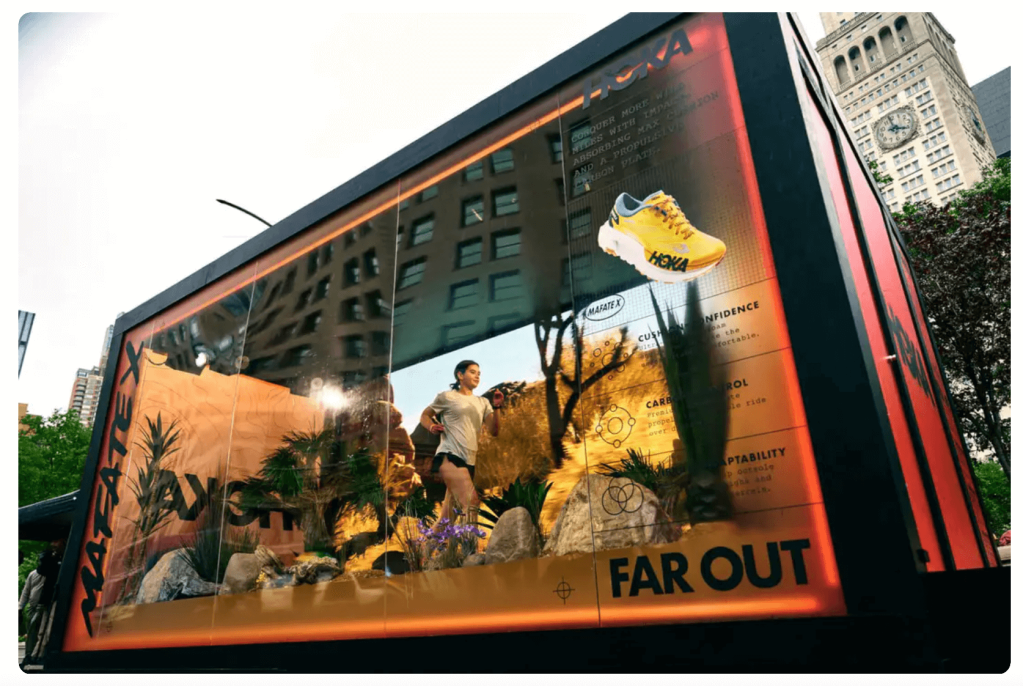
For the launch of the Mafate X sneakers, the HOKA brand turned part of Manhattan into a real desert track. For two days, urban space was filled with sand, rocks, heat, wind, and the sounds of nature, with a treadmill featuring an interactive background appearing in the center. Using Unreal Engine, the landscape changed in real-time, adjusting to the running speed and rhythm of each participant. The lighting transitioned from morning to twilight, creating a unique scenario for each run. During breaks, the installation functioned as a large-scale 3D billboard with Mafate X visuals and footage of professional runners. The campaign showed how DOOH can turn into a full brand experience.
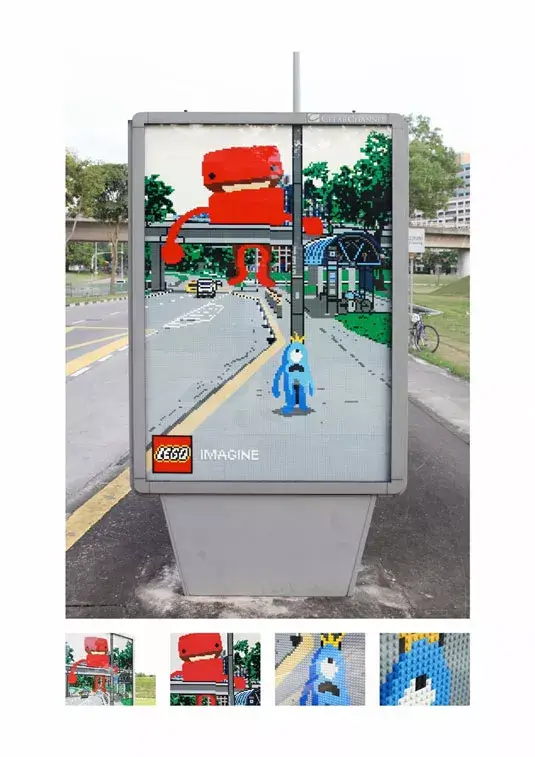
On billboards and bus stops, a unique Lego image is depicted that perfectly fits the exterior. The board is a portal into another dimension made entirely of Lego. Certified Lego artist Nicolas "Blackbulb" worked on creating three separate bus stop signs: "Whale," "Monster," and "Caterpillar."
material taken from www.creativebloq.com
The functionality of the BannerBoo online banner maker is perfect for you. We have created a creative environment for marketers to help develop HD format advertisements for various businesses.
Follow the algorithm:
Get inspired by the examples of creative delivery and marketing approaches to the development of advertising materials provided in this article. Also – check out 12,000+ ready-made professional templates in BannerBoo. This will help you choose a design by style, task, animation, aesthetics, mood, or color.
Just enter your email and create a password to gain access to collections of templates and a full set of tools for creating banners from scratch.
You have two options: create a new banner in HD format or choose one of the templates.
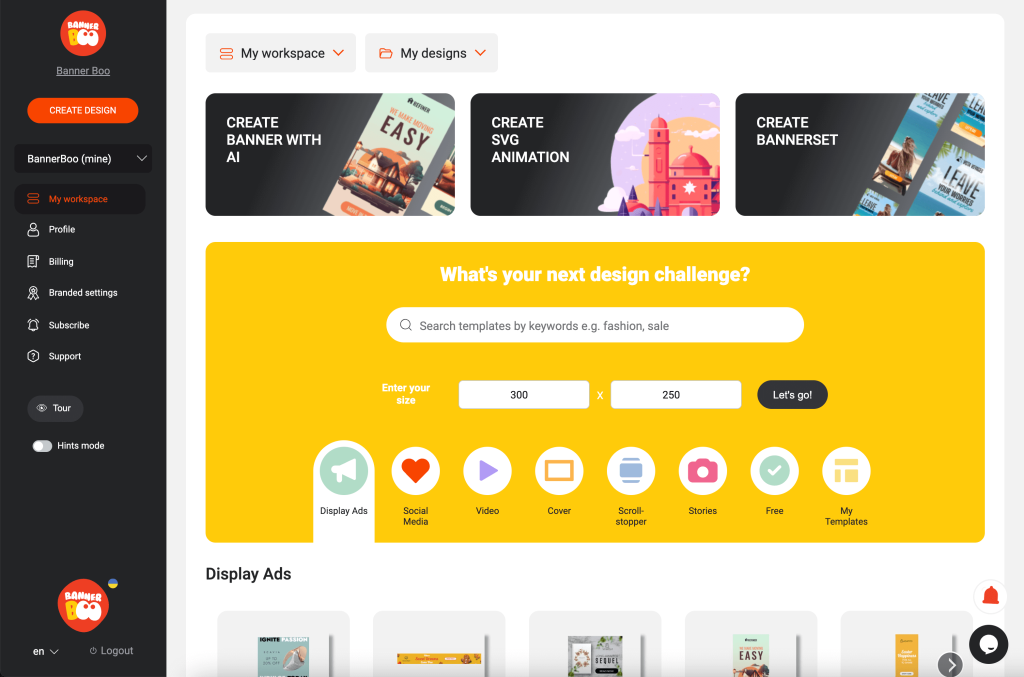
if it's a new banner: implement all your ideas in a simple and clear graphic interface where all the tools are designed for your convenience.
if you chose a template: adapt it to your business needs. Change colors, texts, and brand fonts, images, and photos; review the animation and visual elements. You can completely change the template until it's unrecognizable, but so that it conveys the emotions and style of your brand.
Animated GIF stickers and labels, text animation, custom code or style. BannerBoo has everything you need. Don't worry, we've made sure that all technical moments don't interfere with your creativity.
Choose the required banner format to download to your laptop for placement, printing, and publication.
Creating advertising banners has never been so simple and convenient. Choose BannerBoo and save resources to make the most of all DOOH opportunities.
DOOH combined with artificial intelligence opens a new era of outdoor advertising. AI allows for creating personalized, dynamic, and interactive campaigns that accurately hit the mark and engage the audience at a deeper level. And this trend will only intensify!
DOOH is ceasing to be just an addition to the marketing mix and is becoming a strategic channel with measurable effectiveness. Brands that implement this tool today gain a significant advantage, forming a modern and technologically advanced experience for their audience.
Read the new article “Inspiring examples of outdoor advertising”
DOOH uses opportunities to broadcast content to the audience through digital screens in elevators, airports, train stations, street advertising, billboards, and television programs. More about DOOH can be read at the link.
DOOH continues to grow rapidly and has already turned into one of the key channels of outdoor advertising. According to market research, the share of digital outdoor advertising grew from 28.3% in 2019 to over 38% in 2023, and by 2026, experts predict it will exceed 45%. The growth is driven by the implementation of programmatic DOOH, dynamic creatives, and the possibilities for accurate measurement of effectiveness. This makes DOOH not just an image carrier, but a powerful tool for personalization and real-time audience engagement.
The first thing you think of when you hear "outdoor advertising" is huge billboards. But the forms of advertising vary:
radio;
television;
newspaper publications;
magazine publications;
direct mail.
Want DOOH to be effective and targeted?
thoroughly analyze the target audience and determine the needs your brand can address;
select a high-quality location; it's important that there is a high concentration of potential buyers there;
create a high-quality and creative advertisement.
DOOH advertising activities are guaranteed to bring high results when they:
meet the requests of the target audience;
actively communicate with potential consumers;
are personalized and differ from competitors' activities in the market.
Three key aspects that help DOOH campaigns become successful:
adaptability (technologies that manage content);
minimum text on the screen (it should float or move slowly so that viewers can read the ad);
relevance of the ads (matching the audience's requests and needs).
Campaign results are usually evaluated by comparing KPIs (sales, registrations, downloads, etc.) before and after the campaign launch. However, you can also add:
analysis of mobile data to move to the analysis of a specific location;
special promo codes or QR codes to track the number of users who use them.