What should the budget for a banner advertising campaign be? It is difficult to find a definitive answer to this question without detailed analysis of all the factors affecting display ad prices and identifying what specifically influences the budget. Many businesses, especially small ones, believe that banner advertising is quite an expensive endeavor, but this is not the case at all, and there are many opportunities to advertise relatively inexpensively with high results.
Banner advertising is a fairly popular marketing tool. It allows interaction with a large number of target clients and contact with them at the moment of the most likely purchase decision – while searching for products on Google and partner sites. At the same time, banner advertising is visually appealing and allows for a creative presentation of your business. According to forecasts, ad spending in the banner advertising market will reach $196.5 billion USD in 2026.
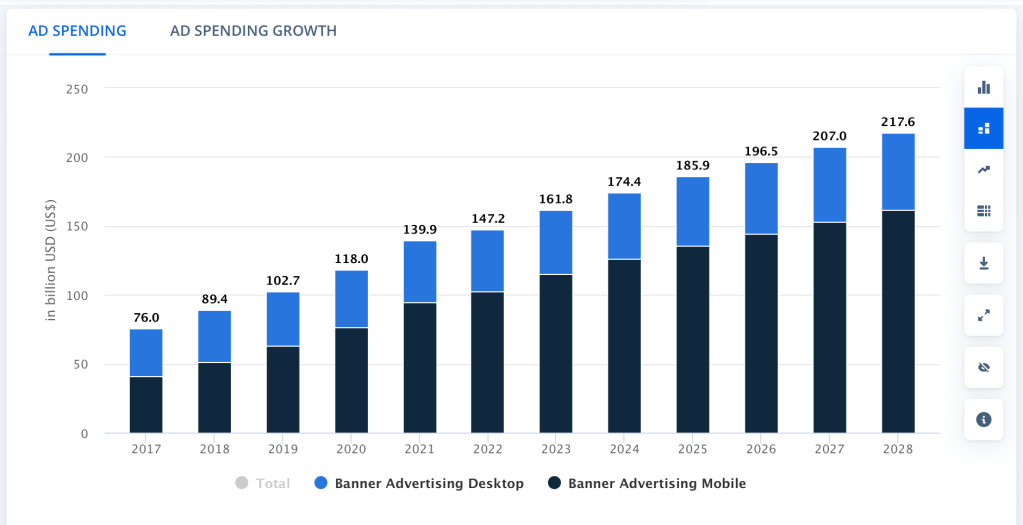
* material taken from https://www.statista.com
In essence, a banner is a visual representation of advertising in the form of images or multimedia elements strategically placed on the required pages of websites. These can be both static and animated formats, whose tasks are to attract the viewers' attention and motivate them for further interaction with the content.
The tasks of banner advertising are relevant to all businesses:
increasing brand awareness;
attracting visitors to the website;
promoting specific products or campaigns;
sales and order placements.
Budget selection is another important process, as brands do not always have unlimited resources. Therefore, it is necessary to understand the intricacies of banner advertising pricing to effectively allocate your marketing budgets and achieve optimal return on investment (ROI).
Real prices for keywords and graphic ads for your business can only be obtained by running test campaigns. However, understanding the factors that influence the average cost can give you an idea of the required budgets right now.
Average ad spending per internet user in the banner advertising market is expected to be $33.4 - $34.23 USD in 2026 and will gradually grow up to $35.11 in 2028-2030 (according to https://www.statista.com).
At the same time, prices are affected by:
Although banner advertising is effective for reach, awareness, and brand support, its cost-effectiveness compared to other advertising channels should be considered:
search advertising (PPC) can be more expensive than banner advertising, with an average CPC (cost per click) from a few cents to several dollars;
video advertising displayed on platforms like YouTube often has higher production costs and CPM rates compared to banner advertising: $10 to $30 or more.
Understanding average banner advertising costs allows companies to make informed decisions when allocating a marketing budget.
Thus, among the factors, the main ones can be identified:
the size and format of the ad banner, which significantly affects its cost (logically, larger and more visually attractive types have higher prices due to good visibility and engagement potential);
ads at the top of the page (above the fold) or on high-traffic pages usually have higher rates;
ads placed within relevant content or on sites with a specific audience may also have a premium price;
targeting a specific audience segment influences the overall budget;
different advertising platforms and networks have different pricing models: GDN, Programmatic, Direct; the choice of the buying channel directly affects CPM/CPC and targeting capabilities, and therefore the overall campaign budget;
ad design and quality affect prices because high-quality content attracts attention, allowing you to get more clicks and conversions for the same price.
The impact of factors on the cost of advertising can be systematized in a table:
| Factor | Impact Level | Comments |
|---|---|---|
| Ad Placement Platform | High | Depending on the purchase method (GDN, Programmatic, Direct), the cost can vary significantly |
| CPM / CPC / CPA Model | High | CPM is cheaper for reach, CPC/CPA are key metrics for sales and efficiency |
| Targeting (Geo, Demographics) | Medium | The more specific the audience requirements, the more expensive the interaction with them |
| Banner Size and Format | Medium | The larger the format and the more interactivity, the higher the placement fee |
| Position on the Page | High | Advertising at the top of the page is always more expensive |
| Creative Quality | Medium | A well-thought-out banner can significantly reduce CPC/CPM |
| Advertising Goal | High | Different strategies require different budgets |
Now that the cost of advertising is clear, let's move to the next point: ad banner design.
There are two ways:
Pros: the specialist's experience with graphic design principles, branding, and visual communication ensures that the ad banner will effectively attract the audience's attention and convey the desired message.
Cons: a designer does not have detailed knowledge of your business and audience, so you need to create a detailed technical assignment and monitor the work.
Cost: varies greatly depending on the designer's experience, task complexity, and turnaround time. Prices on freelance platforms like Fiverr can start from $5 for basic designs but can reach $100+. For agencies, the hourly rate can range from $50 to $200 per hour.
There are many tools that allow you to work on graphics even without design skills. The best option is BannerBoo, which has wide functionality and 12,000+ ready-made templates available for editing.
Pros: you can choose design options, including different sizes, formats, fonts, colors, and graphics, allowing you to adapt banners according to branding needs and marketing tasks. Plus, it's fast!
Cons: you need to have advertising ideas and prepare texts yourself.
Cost: many banner creation tools offer free basic plans with limited features, and premium rates starting from $10 per month.
Using BannerBoo as a banner creation tool is a more cost-effective option, especially if you need to update ads frequently. We offer accessibility from anywhere in the world, flexibility, and ease of use, allowing users to create professional designs without design skills. Watch the video tutorials on creating banners in BannerBoo and see the benefits of the tool for yourself.
When you understand the approximate budget, it immediately becomes easier to evaluate startup costs and results. To plan everything correctly, all factors must be considered.
So, what needs to be done:
Important! If you decide to use the services of a third-party specialist, include time for the search in your budget, as this is a rather laborious and resource-intensive process. If you need advertising here and now, keep in mind that it won't be fast.
Generally, banner advertising has three large categories of purchasing:
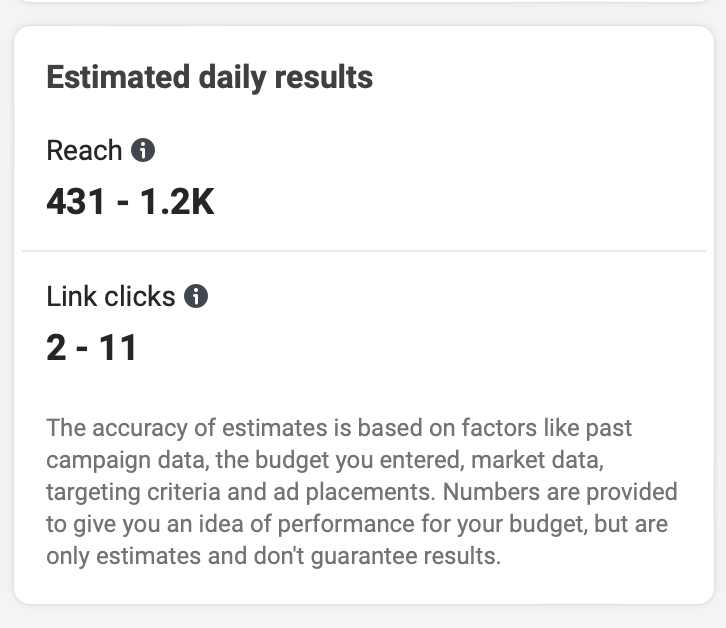
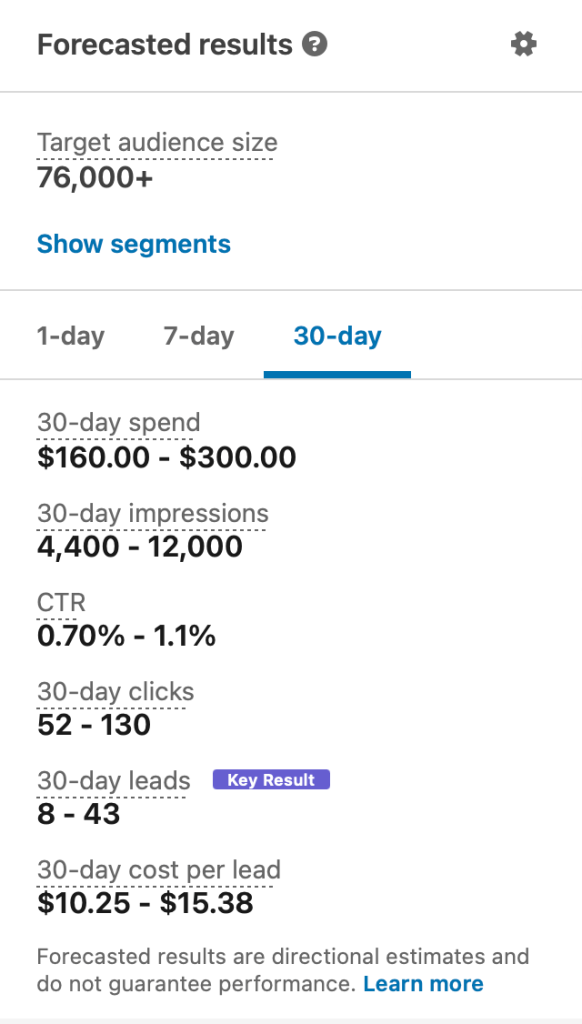
Ad networks show estimated results for selected targeting options (geography, demographics, interests, etc.), which then need to be evaluated to see if they suit you:
Facebook Ads
LinkedIn Ads
Google Ads
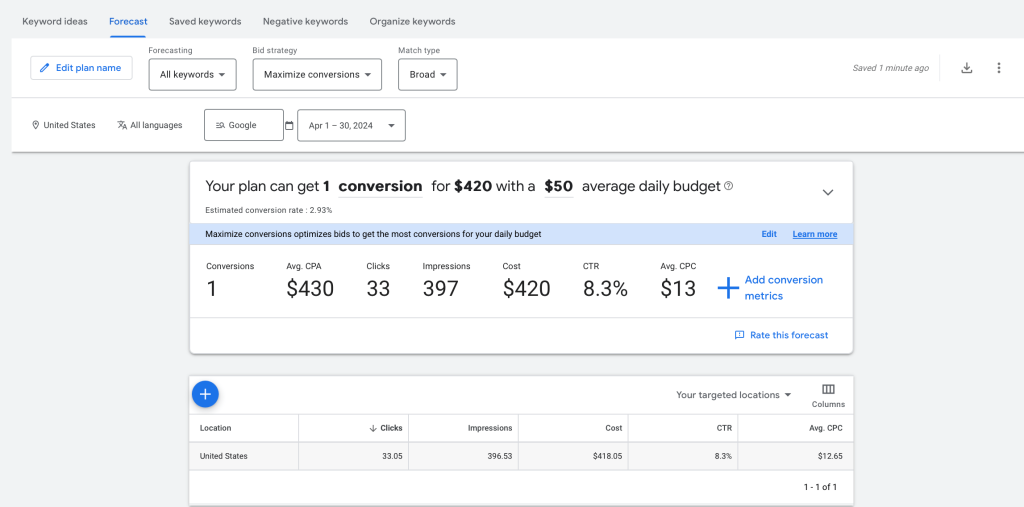
Important! Advertising platforms charge taxes for using their services, so include them in the overall budget.
The total campaign budget would then look like this:
If your product or service has a profit of $10 from one sale, then you need 60 sales per month (2 sales every day) for the advertising costs to pay off.
To optimize ROI, it is important to track campaign performance and adjust advertising based on real results.
Certainly, there are ways to optimize banner advertising to reduce budgets while achieving high results. Let's look at them in more detail.

*example of a BannerBoo banner template from the "Pets" category
Constant optimization of advertising and its visual component is a guarantee of budget savings and consistently high interaction rates.
Banner advertising has been, is, and will long be one of the most popular and effective online marketing tools. However, understanding the costs and goals is important for maximizing ROI and optimizing ad creation efforts.
As technology and consumer behavior continue to evolve, staying updated on new trends and best practices in banner advertising is crucial for companies aiming to stay connected with their target audience. At the same time, don't forget about experiments! Only by testing various formats and banner reach strategies will you be able to find the most successful and effective combinations.
This is not a fixed amount, as it depends on many factors:
On average, the budget starts from $400-500/month for small campaigns up to tens of thousands of dollars per month and more for large brands with wide reach.
On average, displaying a banner ad can cost from a few cents to several dollars per click (CPC) or per thousand impressions (CPM).
Average data:
CPM (price per thousand banner impressions)
CPC (price per click on a banner)
Although some studies indicate a decrease in the overall click-through rate (CTR) for ad banners, they still play a significant role in brand awareness, increasing site traffic, and influencing purchase decisions when used effectively.
Main benefits of banners:
increasing visibility and brand awareness;
new creative solutions for companies;
targeted reach of the desired audience segments;
cost-effectiveness compared to traditional advertising channels;
measurable effectiveness.
Banner advertising generates revenue through various pricing models, specifically:
Cost Per Click (CPC): paid every time a user clicks on an ad banner and goes to the site;
Cost Per Thousand Impressions (CPM): paid for every thousand times the ad banner is shown to users, regardless of the number of clicks;
Cost Per Action (CPA): paid for each conversion action after clicking on the ad banner.