The modern audience sees thousands of ads every day, and only those that touch their emotions or problems, offer real benefits, and build trust get results. In 2026, advertising texts must be more than just beautiful; their task is to effectively, clearly, and precisely convey the key message. If your offer can be described in two words – let it be two words that hit the target exactly! Let's talk about how to build effective headlines, key messages, and CTAs so that every ad launch works for your budget and conversions.
In 2026, competition has reached its peak: brands are fighting not only for clicks, leads, and conversions, they are fighting every second for the attention of a person scrolling through a social media feed while commuting to work, having a break, or relaxing at home in the evening. According to various data, the average user sees over 5,000 advertising messages per day. The essence of the vast majority of them is hard to remember, but not because the product is bad or there weren't enough impressions. Most often, the problem lies in the content.
Most advertising texts are created according to the same scenario: describing the product, providing information about functions (generously adding words about efficiency, rationality, economy, and the best solution), and expecting that the user will be ready to buy, order, or learn more. In reality, you need a bit more emotion, an understanding of exactly how the client's problem will be solved, and a strong CTA that motivates action here and now.
Copywriting is the art of writing so that your brand is noticed and focused upon!
How did advertising texts change in 2026?
The requirements for advertising texts have significantly increased over the last few years. Today, simply writing text is no longer enough for several reasons:
People's behavior has changed.
The audience has become smarter, less patient, more skeptical, and much better at recognizing advertising patterns. What is not interesting is ignored or perceived as noise.
Platform algorithms have changed.
Google, Meta, or any other platform is also fighting for quality content, rather than just showing ads. They evaluate relevance, engagement, expected interaction, and even the semantic matching of the text to the user's intent. The less thought-out the text, the lower the CTR, the higher the CPM, the more expensive the clicks, and the more limited the scaling.
Brands can no longer afford to make mistakes.
Every ineffective ad is a lost budget, lost data, and changes in analytics that complicate decision-making later. But most importantly – time, which certainly cannot be returned (unlike material values).
Why do most texts not sell?
There are several typical reasons why even good products don't get results from advertising:
Focus on the product, not the person (companies emphasize what they changed in the product instead of talking about the benefits and matching the audience's requests);
Lack of clarity in the message (it's often not clear what exactly is being offered: a consultation, a demo, a discount, or just learning more);
Complete distrust of brand promises (without numbers, proof, cases, or social proof, even the best offer looks like another marketing trick);
Lack of data in testing for analysis (campaigns are often launched without hypotheses, without a plan, without analyzing the reasons for the increase or decrease in results).
Advertising copywriting must also have a strategy, planned indicators, and a field for testing hypotheses. As always in digital marketing: the most important thing is the plan!
The most popular copywriting formula for creating ad texts
A strong advertising text is built according to a clear scheme:
Audience – understanding who you are writing for (key demographic data, pains, interests). Example: "Freelance designers looking for stable projects."
Pain / Desire – the first phrase should hook them, showing that you understand their problem. Example: "Tired of searching for clients on your own?"
Offer – a specific proposal that solves the problem or satisfies the desire. Example: "Get a steady flow of leads from clients in 7 days."
Proof – numbers, cases, reviews that strengthen trust. Example: "98% of our students received their first payment within a week."
CTA – a clear call to action that tells the user what to do next. Example: "Enroll now."
Now, more details on each point:
Understanding the audience
Critically important for every advertisement. Only by understanding the needs and desires of clients can you create text that will not be scrolled past in the news feed.
Pain, need, or desire of the target audience
How not to miss the mark with the accent?
identify what worries the audience every day;
focus on the consequences of the problem, not the symptoms;
use emotions that push toward action.
Examples:
"Losing clients every day?"
"Spend 5 hours creating a banner?"
"Does the site bring in orders every day and work 24/7?"
The key proposal they want to buy
An advertising message should immediately answer the question: "What will I get and why right now?"
Rules for an effective offer:
Benefits > Features – show the advantage, not the functions;
concreteness and numbers – "+25% leads in 30 days" is better than "more clients."
deadlines or limitations create a sense of urgency.
Building trust and social proof
Reviews, statistics, cases, and numbers form a sense of reliability. To avoid looking fake, pay attention to these tips:
avoid manipulative juggling of numbers in advertising texts;
always indicate sources or specific results;
use photos/videos from real people (UGC).
CTA
Even an ideal offer without a clear call to action will not bring results:
use strong verbs: "Get", "Try", "Register";
add motivation: "for free", "in 3 minutes", "with a guarantee";
adapt the CTA to the goal: sale, subscription, demo, download.
While you're reading about trends and marketing, someone is already creating clickable ads in BannerBoo. Create animated HTML5 banners online without code or designers.
Effective advertising text aims to achieve a result: a sale, leaving a request, downloading an app, or requesting a consultation.
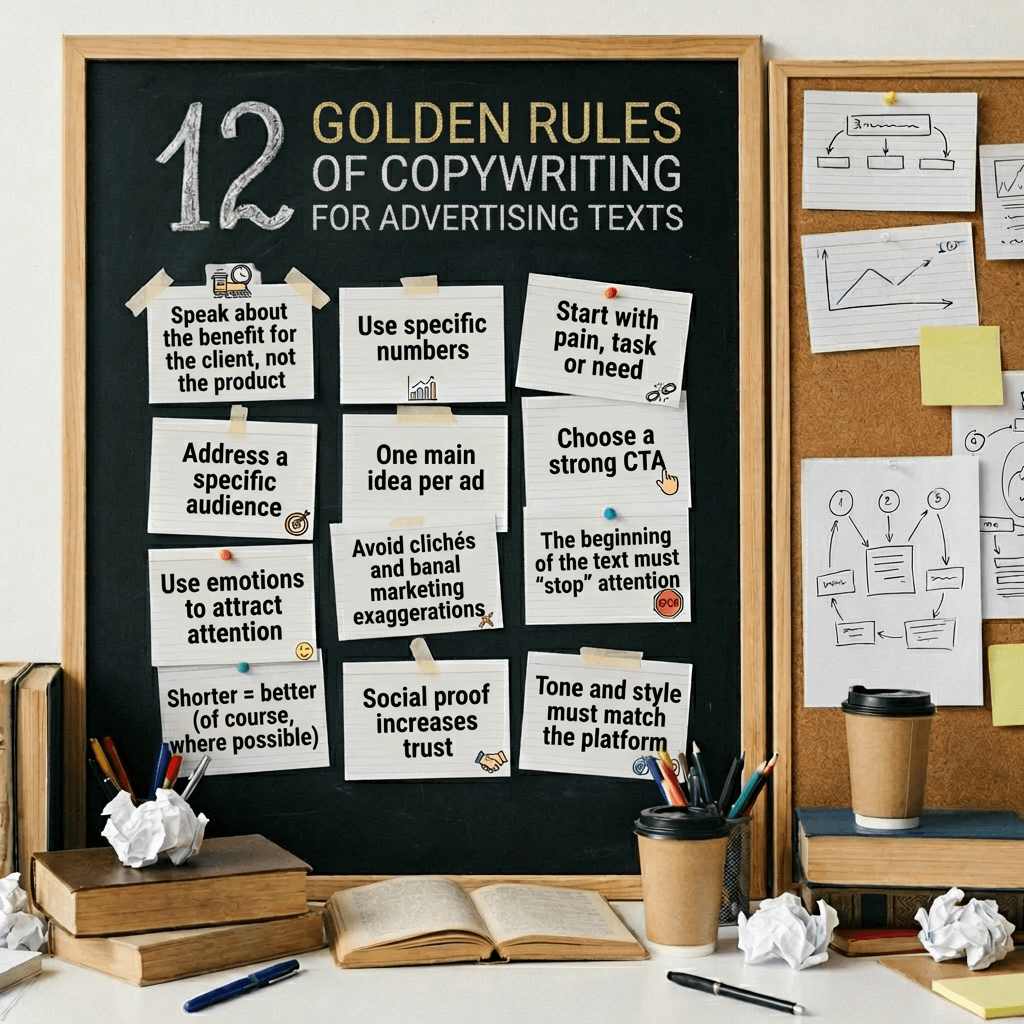
Here are twelve rules that will help you write texts that work and avoid the most common mistakes.
Talk about the benefit to the client, not the product
No: "Our CRM is fully automated"
Yes: "Automate routine tasks in CRM and save 10 hours of work time per week"
Use specific numbers
No: "Get more clients"
Yes: "+25% leads in 30 days"
Start with pain, task, or need
No: "We do website SEO"
Yes: "Your site is not ranking? We will fix it in 2 weeks"
Address a specific audience
No: "For all businesses"
Yes: "For SaaS teams that want to scale sales"
One main idea per ad
No: "New CRM + email + chatbot – all in one"
Yes: "A CRM that automatically reminds clients about payment"
Choose a strong CTA
No: "Learn more"
Yes: "Get a product demo now"
Use emotions to attract attention
No: "Our software is reliable"
Yes: "98% of our clients set up stable automated reminders on their own"
Avoid clichés and banal marketing exaggerations
No: "The best solution on the market"
Yes: "Increased CTR by 42% in 90% of campaigns"
The beginning of the text should "stop" attention
No: "We offer..."
Yes: "Losing clients every day?"
Shorter = better (where possible, of course)
No: long paragraphs of description without need
Yes: concise headline + key message
Social proof increases trust
No: without reviews or cases
Yes: "300+ companies are already working with us"
The tone and style must match the platform
No (TikTok, Meta): "Optimize business..."
Good: "Boost your business in 30 days!"
Optimization of the advertising message for the placement platform
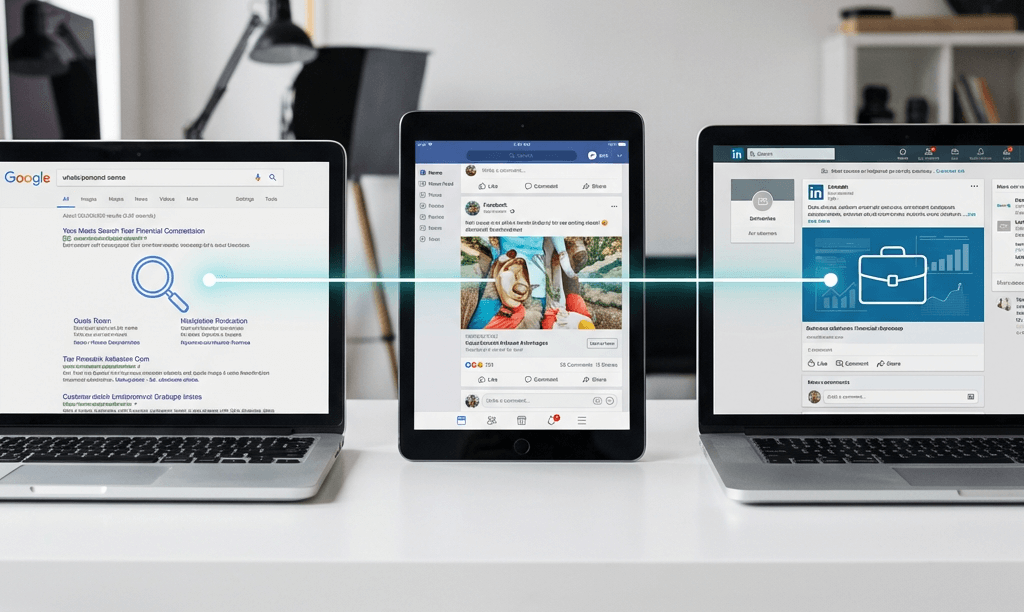
Advertising text must also match the style and format of the platform. What converts well in Google Search is often ignored on Facebook or LinkedIn. How to fix this? Consider the context of each placement platform.
Google Search
Task: answer the client's request
Content style: clear and specific, the user is looking for a solution or product
Example: "CRM for small business – automation of business processes in 7 days"
Features:
use exact keywords;
offer specific results and numbers;
avoid complex emotional formulations; relevance and quick response to the query are important here.
Meta (Facebook, Instagram)
Task: stop the feed scrolling process
Content style: entertaining or informational, the user is not looking for a product, they are scrolling through news and posts from friends
Example: "Tired of endless reminders to clients? Automate CRM work and save over 10 hours a week. 300+ companies are already optimizing their business processes!"
Features:
the first sentence should stop the scrolling and exactly match the audience's needs;
use emotions, questions, short stories; it's important to write "for the human" here;
long texts are rarely read – it's better to make structured paragraphs and use emojis for accents.
LinkedIn
Task: sell a business solution
Content style: professional, the person is looking for solutions for business, efficiency improvements, or career opportunities
Example: "Do your managers spend hours on routine? Implement a CRM that automates processes and increases team productivity by 30%. Over 150 B2B companies have already seen results"
Features:
LinkedIn values professional language and structured logic;
use cases, numbers, facts;
weak or emotionally "entertaining" texts work poorly.
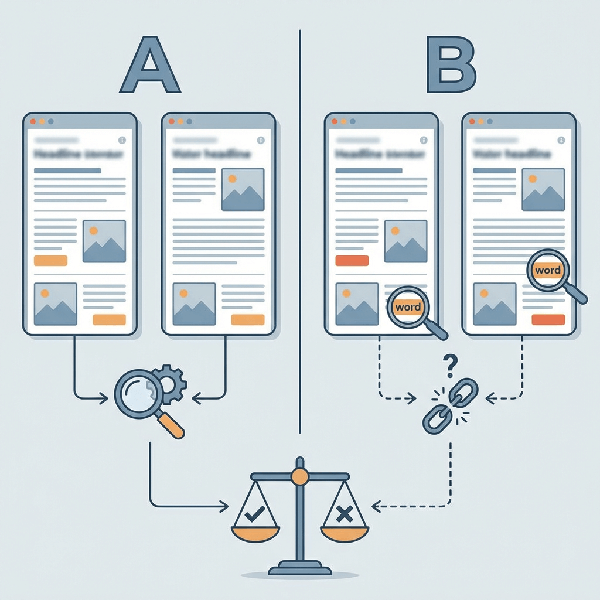
A/B testing of texts
A/B testing is the basis of a systematic approach to advertising copywriting, because even the most creative option can be ineffective. The main rule: test the entire ad comprehensively, rather than random elements of the text.
What should be tested?
headlines and lead paragraphs (the first words that stop the audience's attention);
the key message and benefits or deadlines;
CTA – which version resonates most with the audience;
reviews, cases, numbers – what brings the most engagement;
text format: length, paragraphs, emojis, bold highlights.
What makes no sense to test?
words without meaning or trivial synonyms – "quickly" vs "promptly" without context;
decorative elements (if they do not affect the CTA);
large simultaneous changes: you cannot change 3–4 elements at once, because it won't be clear what exactly worked.
And of course, testing on a very small audience does not yield any systematic result, so decisions cannot be made when your advertising campaign has only been running for 1-2 days.
A/B testing must gather the necessary data sample so that the results achieve statistically significant values. Yes, it takes time, but in the long run, it is testing that allows for identifying the most effective texts, minimizing budget losses, and scaling successful ads.
Final quality checklist
This checklist will help you confidently launch advertising texts and minimize costs on non-performing ads. Check ✔️ if this point has already been considered:
audience is clearly defined
headline stops attention and matches the client's task/need
key proposal is specific and clear
benefit outweighs the description of functions
numbers, social proof, or cases are present
CTA is clear and motivates to action
text can be read in 3–5 seconds
concise, without clichés and extra words
emotional triggers are used appropriately
tone matches the platform and audience
structure corresponds to the proven formula: Audience → Pain → Offer → Proof → CTA
all links work
design does not distract from the overall text
display in the mobile version is accounted for
A/B testing plan is ready and hypotheses are formulated
Conclusion
Advertising copywriting is a structured methodology, not inspiration in a specific moment. Creativity, experience, and intuition remain important parts; however, without a systematic approach, they rarely provide a predictable and stable result.
Effective advertising text is built around the needs of the audience, not product characteristics, combining clear benefits, social proof, and a clear call to action, adapting to the specific platform and user intent, and being constantly optimized.
Advertising copywriting is a system that can be scaled, reproduced, and improved. Its implementation allows for creating advertising texts that consistently generate sales and optimize the advertising budget, instead of relying on accidental successes.
Looking for a way to launch ad campaigns quickly? With BannerBoo, you can generate dozens of HTML5 banners in the required sizes in minutes using ready-made templates. Sign up now to explore all platform features.