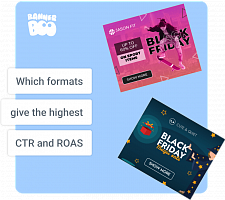
What you should immediately know about effectiveness in digital advertising in 2026 is that it's not about who has more banners, but who has a stronger message. The world is changing too fast, users know how to think critically and distinguish marketing manipulations, competition is growing, and every click today costs more than a year ago. In these conditions, text decides whether a person stops at your banner or passes by. Strong advertising text contains less and less creativity, and more and more systematicity. The right trigger, the right structure, and the right delivery are the key characteristics of a successful advertising banner.
In the world of banner advertising, everything is changing rapidly: formats are becoming more interactive, algorithms are getting smarter, and audiences are more demanding. But there is one element that remains key regardless of the platform or format. It is the power of ad copy that can transform an ordinary banner into a tool for sales, lead generation, and building a loyal brand.
It's not enough to simply write "-20% today" or "Buy now." Competition for attention is so high that only well-thought-out creative text works – one that takes into account user psychology, funnel stage, audience type, and display context. The same design can yield completely different results depending on the text phrasing on it.
Brands that consistently achieve high CTR and conversions do not rely on intuition. Firstly, they know their target audience well and understand their motives. Secondly, they test different triggers and structure messages so that they can be read in 2-3 seconds. And last but not least: they adapt the text to the format of the banner itself (static, carousel, HTML5 animation, video, or dynamic retargeting).
We have collected examples of ad texts from big brands and categorized them by influence mechanics to understand why they work and to motivate applying these principles in your own campaigns. If you create banners, run performance advertising, or work with creatives – this is an excellent resource for systematic testing and scaling results.
The best way to understand how strong text works on an advertising banner is to analyze the experience of brands that certainly had marketing budgets for large-scale testing. Often, in marketing strategies, there is no place for random phrases; it's a lot of work on audience analysis and forming a clear strategy.
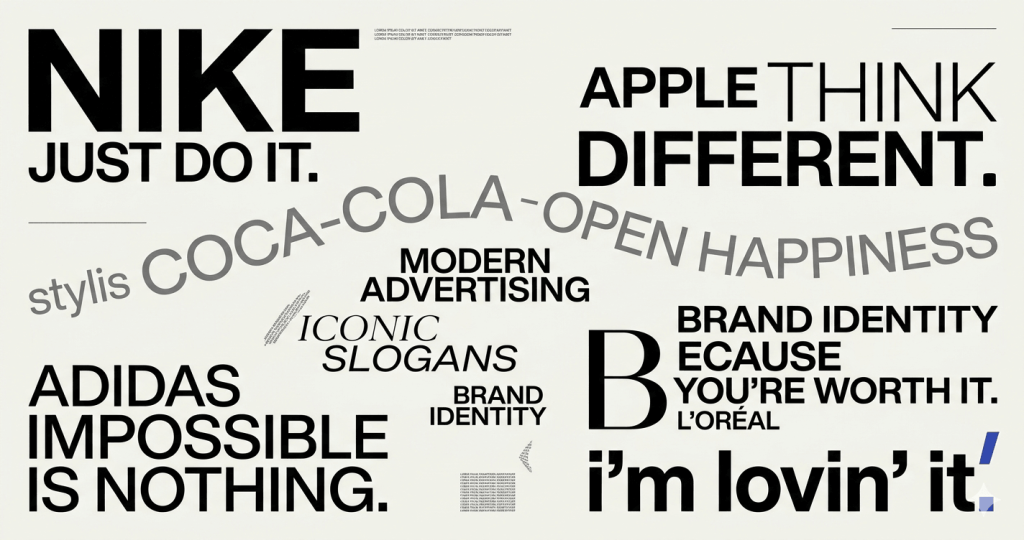
Scarcity is one of the strongest triggers in ad copy. It works through the fear of loss: people react more emotionally to the risk of losing something than to the opportunity to gain something. Simply put, the prospect of "not making it in time" motivates more strongly than the prospect of "getting more."
Urgency in banner advertising:
The main rule: scarcity must be real. When the limitation is justified (end of a sale, limited batch, countdown timer), it acts as a powerful motivator. Obviously, running a banner for a month with an urgent sale is not a good idea.
Text: «4 days for great deals»
The phrase creates a strict time limit that activates the fear of loss. The user understands that the opportunity will disappear, and a decision must be made. The concise wording allows the message to be read in a second, the lack of details forces the brain to independently add value to the offer. This reduces comparison with competitors and speeds up the click.
Where to use? Works best in HTML5 banners with a countdown timer. Suitable for the final days of sales and seasonal campaigns, the format is effective in retargeting when the audience is already familiar with the product.
Text: «Only N Room Left at This Price»
The text combines two powerful factors: quantitative scarcity and price specificity. This creates a sense of real loss, not abstract urgency. The user sees that the choice is limited right now. Such a message shortens the time for deliberation and reduces rational analysis of alternatives.
Where to use? This approach works great in retargeting campaigns, effective in performance strategies aimed at quick conversion.
Text: «Available Now. While It Lasts»
The phrase creates a sense of necessity. The client wants to be among the first to receive this product. Exclusivity increases the perception of value, the message is not overloaded with details, so it is easily read in the banner.
Where to use? Ideal for launch campaigns and fashion drops, but works most effectively with an audience that already follows the brand.
Text: «Final Reductions»
The minimalistic message creates tension, appealing to the fear of losing a benefit. The text is easy to integrate into any banner format. This formula is especially effective for an audience that has already interacted with the brand and works as a final trigger for decision-making.
Where to use? For retargeting and abandoned carts, it will be effective in mobile banners, email newsletters. It should only be used at the final stage of making a purchase decision.
People often rely on the behavior of others. When we are unsure of a choice, we look for external confirmation: who has already bought, who recommends, who uses. That's why social proof reduces the feeling of risk and accelerates decision-making. It is important for the user to see that the product is chosen by people like them: entrepreneurs of their scale, mothers with similar needs, companies in their industry.
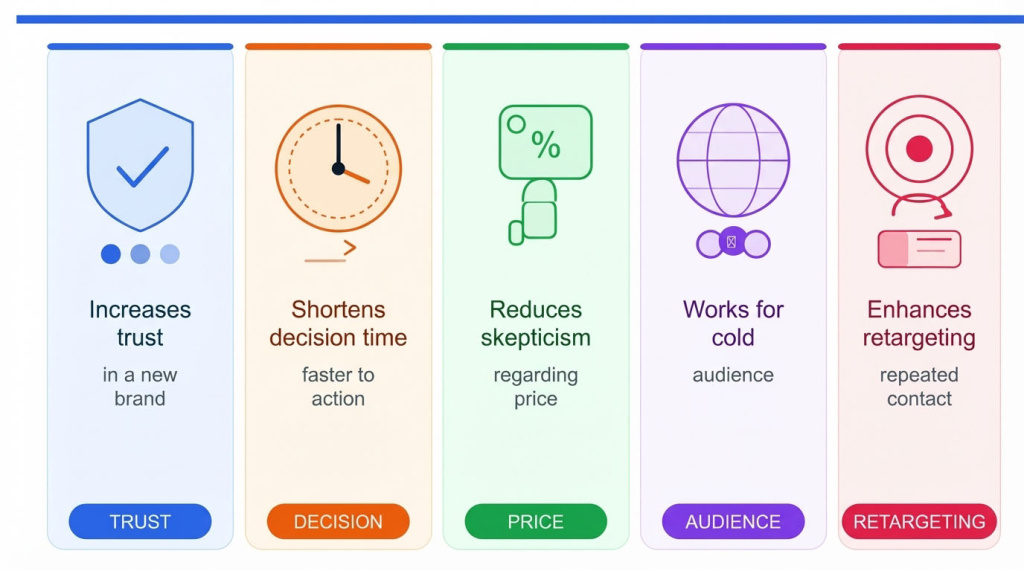
Social proof in banner advertising:
Text: «Guest Favorite»
This text immediately creates a sense of trust and security, as the audience most often relies on the choice of the majority, especially in the service sector. Emotions and persuasiveness are combined, as the text is easy to read in banner format.
Where to use? Suitable for a cold audience, can be used in both advertising campaigns and landing pages.
Text: «5,000+ 5-Star Reviews»
The combination of a large number and a rating creates strong proof of quality. The user quickly assesses the level of trust, so this format works well with fast scrolling. The banner does not require additional explanations – it is a short and convincing argument for buying or ordering.
Where to use? Effective in product advertising campaigns, Google Display or retargeting. Numbers as social proof work well for all e-commerce.
Text: «Join 1,000,000+ Businesses»
In a B2B audience, the fear of making a mistake is especially high, so social proof reduces risk. The phrasing "Join" invites becoming part of a community, not just buying a product. This creates a sense of belonging. The message is easy to read even in a small banner. It works as a short argument without additional explanations.
Where to use? Definitely for B2B: LinkedIn Ads, Google Ads in advertising campaigns for business. Best combined with a clear CTA, for example "Start Free."
Text: «See What the World Listened To»
The phrase combines both social proof and the scale of belonging to a large community. With it, the company becomes a cultural backdrop, not just a service function. The text is short and emotional, so it works well on banners and stimulates clicks through interest, not discounts.
Where to use? This format of text works well in campaigns with personalization, can be used in video. The best result will be in interaction with a warm audience.
The main task of a banner is to give a clear answer to the audience's question "What exactly will I get?". That's why a clear, specific benefit removes the burden, does not force thinking, interpreting, or guessing. The text immediately motivates decision-making.
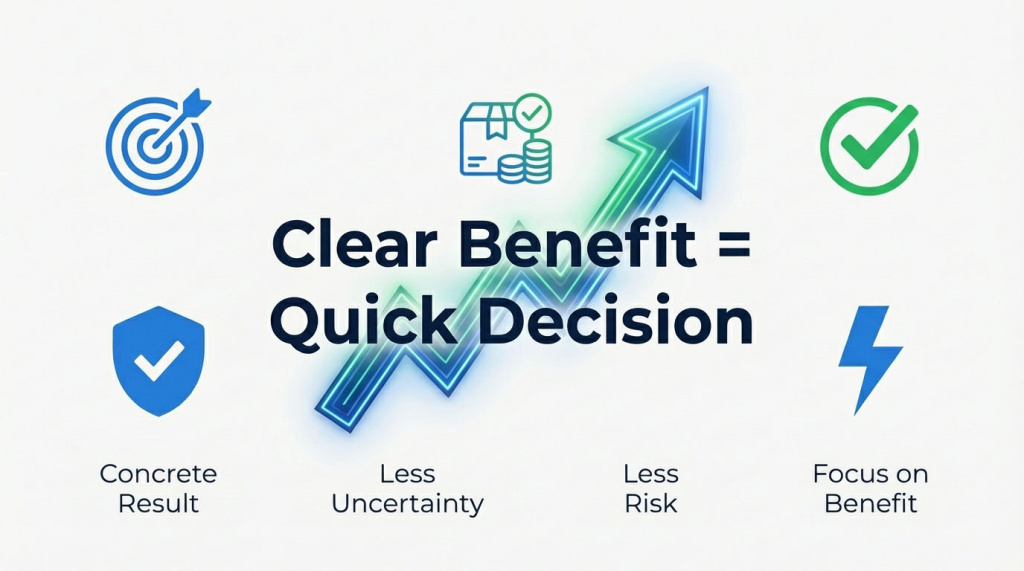
Why is this important?
The simpler the benefit is formulated, the faster the user takes action. In performance marketing, this is often a decisive factor.
Text: «Your First Ride Is Free»
The message is simple and clear without details. In banner format, this is especially important, as the offer looks concrete and measurable.
Where to use? Such short but clear messages work great in performance campaigns, on mobile banners, and are well reinforced by retargeting. Has high interaction rates with cold audiences.
Text: «Try Pro Free for 30 Days»
A clearly defined testing period reduces uncertainty, as the user knows they can evaluate the product without financial risk. The ad has a very specific message and requires no further explanation.
Where to use? This style of ad works in all banner ad formats, can be used in email, effective for platforms and online services. Of course, it's also best to add a clear CTA.
Text: «Watch Anywhere. Cancel Anytime»
The text removes the fear of long-term commitments, emphasizing not payment, but freedom of decisions. Short phrases are easy to read in a banner, and the message creates a sense of flexibility.
Where to use? An effective solution for a cold audience, suitable for all types of performance campaign advertising.
Text: «Trade In. Get Credit»
The phrase consists of two clear actions: the user immediately understands the benefit mechanism. The message looks transparent and logical, and this immediately becomes a rational motive for deciding to buy or subscribe.
Where to use? Works well in retargeting, best to combine text with product visuals.
When a user sees a phrase that hints at something but doesn't provide a complete answer, their subconscious mind strives to find out everything. Clicking on the banner becomes an obvious decision.
 *AI Banner Generator
Unlike scarcity or direct benefit, curiosity doesn't pressure or sell directly. It intrigues. In 2026, when users are overloaded with direct offers and discounts, intrigue often works more effectively than aggressive selling.
Important: curiosity must be linked to real value. If the user doesn't get a logical continuation after clicking, trust decreases.
Ad texts based on intrigue/curiosity:
Text: «Think Different»
The text doesn't sell the product directly, but sells an idea that is easily memorable. It forms an emotional connection with the brand.
Where to use? Ideal for brand campaigns. Works well in video banners, large-scale digital campaigns, but it's best to combine short texts with strong visuals.
Text: «Small Spaces. Big Ideas»
The message simultaneously shows a problem and a solution, simply and easily memorable. The text clearly positions the product and is readable in seconds.
Where to use? Suitable for category banners, works in display advertising, HTML5 banners. Effective for a cold audience.
Text: «The Truth Is Hard»
An emotional phrase that directly creates an intellectual challenge and reinforces the depth of the brand. The text looks confident and serious, forming long-term trust.
Where to use? Suitable for image campaigns and video formats. Can be used in social initiatives, best works with minimalist design.
Text: «The Future of Driving»
The advertisement sells a big idea, not exclusively technical specifications. The user associates themselves with innovation, so this message looks interesting and non-trivial.
Where to use? Suitable for launch campaigns, works well in video banners, effective in display advertising.
Our rational brain trusts specifics more than abstract values. When an advertisement uses a precise number, percentage, or measurable result, the message is perceived as more real and verified. For example, "great price" sounds rather vague, but "$9.99 per month" is concrete enough to understand if the offer is interesting.
In 2026, when the audience has become more skeptical of advertising promises, it is specificity that helps reduce doubt and strengthen the motivation to buy.
Numbers in an advertisement:
Text: «Get 2TB for $9.99/month»
In this example, the user immediately sees the volume and price without hidden details. The advertisement is transparent and honest. Such a message works as a rational argument without unnecessary emotions.
Where to use? Suitable for performance campaigns and tariff banners. Works well in Google Display, retargeting, can be used in HTML5 with phased animation: volume → price → CTA. Shows best results in interaction with a warm audience that needs additional stimulus.
Text: «3 Ways to Grow Faster»
Just by seeing this text, the user understands that they will receive a specific list, not general advice. The phrasing focuses on the result, not the process, so it looks useful and practical.
Where to use? Suitable for content banners, works well in LinkedIn Ads and display advertising.
Text: «15 Minutes a Day»
In this ad, the number creates a sense of realism and relevance. The wording is short and easy to remember, and on the banner, it's read almost instantly. This transforms a big goal into a small daily step and motivates purchase!
Where to use? Ideal for app installations, works in mobile banners and performance campaigns. The effect of this format can be enhanced with visuals featuring a timer or progress bar.
Text: «Save 25% Today»
A specific percentage looks more convincing than general words about profitable purchases. The message is clear and needs no explanation, it works as a rational stimulus to buy – the number attracts attention faster.
Where to use? Ideal for e-commerce banners, retargeting, HTML5 formats with an emphasis on numbers.
People buy not the product – they buy feelings and their future state. Emotional ad copy works deeper than rational arguments because it appeals to identity, self-esteem, and desired changes.
If scarcity speeds up decisions and numbers remove doubts, then emotion forms a connection. It is what helps a brand be remembered, not just sell.
Emotional text for an advertisement:
Emotion doesn't always lead to instant conversion, but it creates that special connection with the brand.
Text: «Feel Better in 10 Minutes»
The wording is positive and simple, and the number adds a sense of reality. In the banner, the message is easy to read and combines rational and emotional arguments.
Where to use? Works well in video banners, performance campaigns, and HTML5 with gradual animation.
Text: «Because You're Worth It»
The text appeals to an inner sense of value and creates an emotional connection with the brand. In a banner, this looks confident and strong, the text is short and easy to remember.
Where to use? Suitable for brand campaigns, video formats, in display and social.
Text: «Like a Girl»
The phrase breaks a stereotype and provokes rethinking. It evokes an emotional reaction to this short but multi-layered message. In a banner, it creates intrigue.
Where to use? Suitable for social campaigns, video and display campaigns. Best combined with emotional video content.
Text: «Real Beauty»
The phrase forms a clear brand position, creating long-term emotional memory. This is an example of banner text that works for years.
Where to use? Suitable for large-scale brand campaigns, works in video banners, display and social networks. Best combined with real stories.
Strong examples of ad copy are not about creativity for creativity's sake. It's about a clear trigger, understandable benefit, and the right display context. As the examples show, strong banner text works when it either reduces risk, enhances desire, or speeds up decision-making.
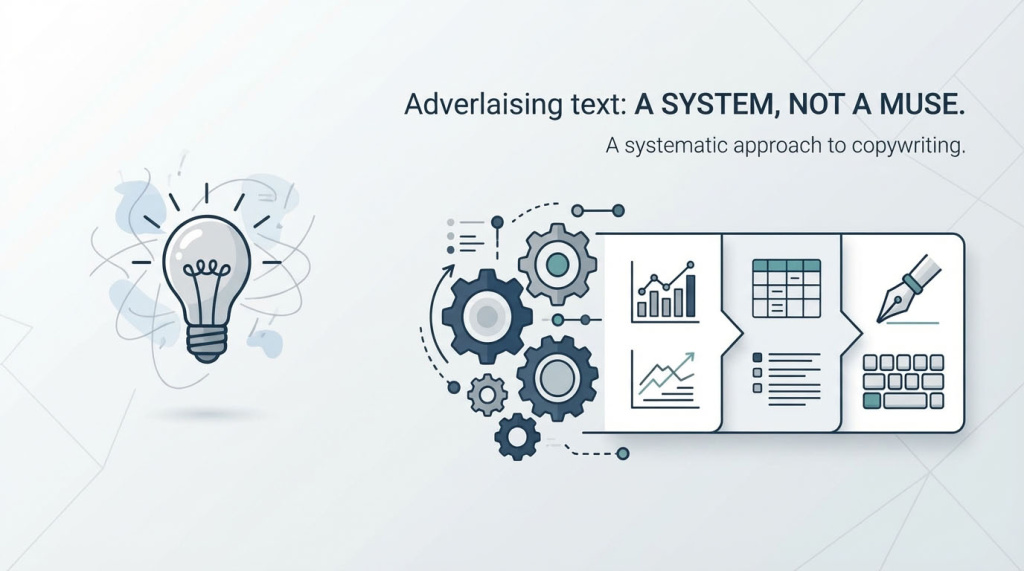
Here are 11 principles that help create creative ad text for any business industry:
A banner for new users should differ from a banner for those who have already visited the site. Clearly consider:
The more precise the segment, the stronger the text works.
If one creative simultaneously features a discount, free shipping, and a new collection — it's impossible to maintain focus!
In HTML5 banners, the first 1-2 seconds decide everything. If the user doesn't immediately see the benefit, they won't wait.
Numbers are perceived faster than abstract formulations:
Reduce formulations to maximum clarity. Fewer words, more action.
The same message does not work equally for different audiences:
Copywriting does not exist separately from visuals. If the text speaks of premium quality, the design should emphasize it.
The greatest effectiveness comes from testing different mechanics:
Test ideas, not just CTAs.
The button should logically continue the text and be the audience's next step. Inconsistency reduces conversion.
Most banners are seen for less than three seconds. The text must be understandable without additional context. If not, simplify.
The best marketers constantly collect examples of ad copy. Not for copying, but for analyzing mechanics.
Effective ad copy is not about creativity for creativity's sake. It's about a clear trigger, understandable benefit, and the right display context. As the given examples show, strong text in a banner works when it either reduces risk, enhances desire, or speeds up decision-making.
In 2026, competition in display advertising will only increase. Users see dozens of creatives every day, so the brand that formulates its message as clearly and concretely as possible wins. Scarcity, social proof, numbers, emotion, or curiosity – these are not just tricks, but tools that need to be used systematically.
The main principle is simple: one idea = one banner = one clear call to action. Collect your own library of examples, analyze mechanics, test different formats of information delivery, and adapt the text to the banner format (static, video, or dynamic advertising).
This is how creative ad copy is created that not only appeals but also truly brings high performance results!